
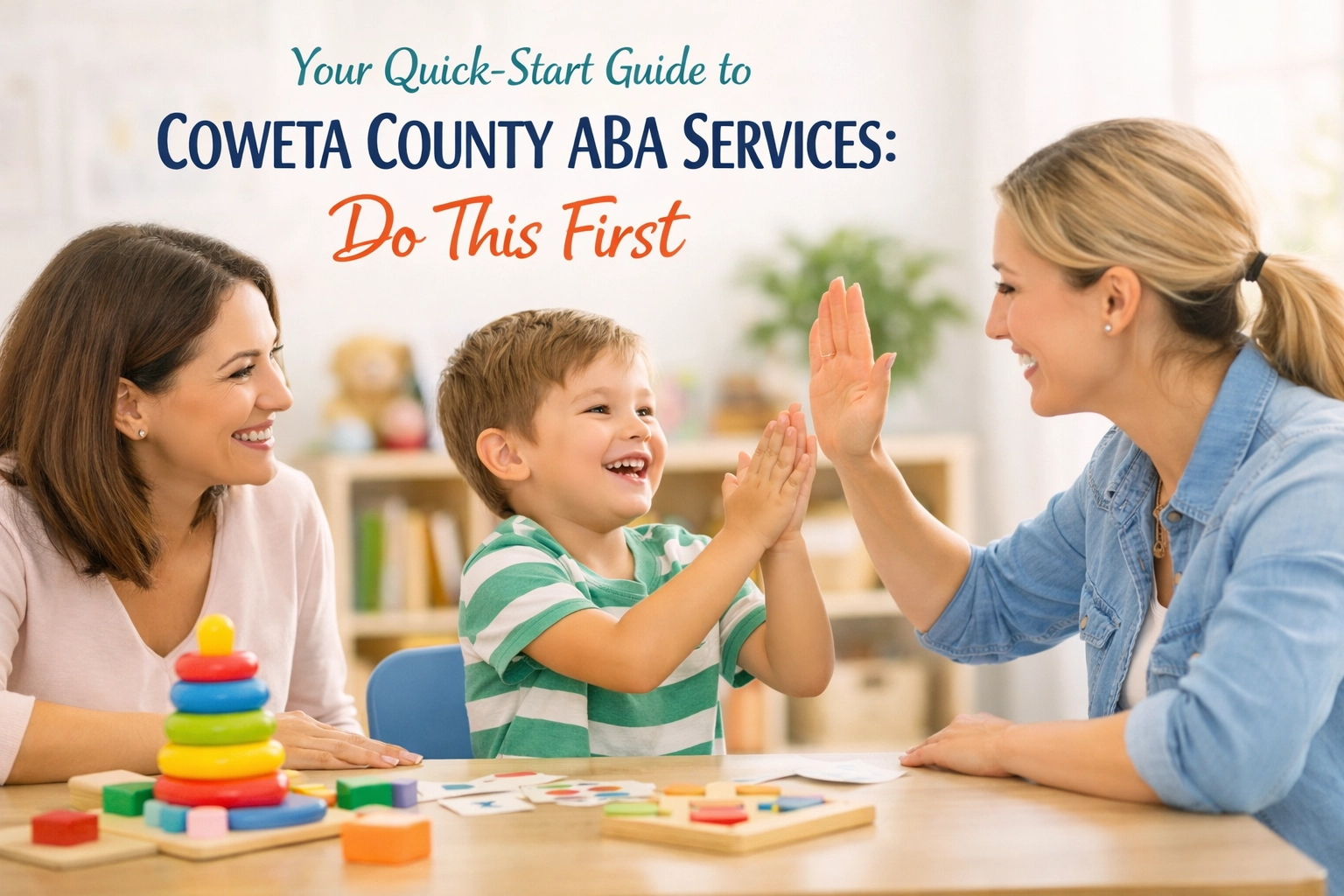
Your Quick-Start Guide to Coweta County ABA Services: Do This First
Navigating the landscape of developmental services in Georgia requires a structured approach. Families in Coweta County seeking Applied Behavior Analysis (ABA) often face long waitlists and complex insurance requirements. Myers Assessment & Therapeutic Service (MATS) prioritizes streamlined access to evidence-based care.
This guide outlines the essential steps to secure high-quality behavior therapy. Efficiency in the initial stages ensures that children receive intervention during critical developmental windows.
The Georgia ABA Landscape: Why Coweta County Families Need a Plan
Georgia has seen a significant increase in the demand for specialized pediatric services. In areas like Newnan, Sharpsburg, and Senoia, the availability of Board-Certified Behavior Analysts (BCBAs) is growing, but navigating the system remains a challenge. Early intervention is the gold standard for treating Autism Spectrum Disorder (ASD) and related developmental delays.
A clear roadmap prevents delays in service delivery. For many families, the transition from a medical diagnosis to the first therapy session can take months if handled incorrectly. Following a clinical protocol for intake is the most effective way to reduce this timeline.
Step 1: The Clinical Consultation – Do This First
The most critical step in the process is scheduling a professional consultation. This is not merely an introductory meeting. It is a clinical screening. During this phase, providers evaluate the child's immediate needs and determine if the practice's specific methodology aligns with the family’s goals.
Most reputable providers in Coweta County offer this as an initial point of entry. It allows for a preliminary discussion regarding behavioral challenges, communication deficits, and social skills.
What to prepare for the consultation:
- A copy of the formal ASD diagnosis (if applicable).
- Recent IEP (Individualized Education Program) documents from Coweta County Schools.
- A list of primary behavioral concerns (e.g., aggression, elopement, or non-compliance).

Step 2: Insurance Verification and Authorization
Insurance is the primary mechanism for funding ABA therapy in Georgia. Navigating the "Georgia Autism Mandate" requires precise documentation. Most major insurance carriers require a specific diagnostic report from a licensed psychologist or neurologist.
Myers Assessment & Therapeutic Service (MATS) and other local providers emphasize that insurance authorization for an assessment is the first hurdle. This process typically takes approximately 72 hours once all paperwork is submitted.
Required Documentation for Insurance:
- Diagnostic Evaluation: Must be performed within the last 2-3 years.
- Referral/Prescription: A formal recommendation for ABA therapy from a physician.
- Member ID: Current insurance coverage details.
Once the provider receives authorization, they can proceed to the clinical assessment phase. Without this authorization, any clinical work performed may not be covered by the carrier.
Step 3: Comprehensive Behavioral Assessment (FBA)
The foundation of any successful ABA program is the Functional Behavior Assessment (FBA). This is a data-driven process conducted by a Board-Certified Behavior Analyst (BCBA).
The BCBA observes the child in their natural environment or a clinical setting. They identify the "function" of specific behaviors: why the behavior occurs. This is categorized into four main functions: sensory, escape, attention, and tangible.
The Assessment Timeline:
- Observations: Direct observation of the child’s interactions and responses.
- Skills Assessment: Utilizing tools such as the VB-MAPP (Verbal Behavior Milestones Assessment and Placement Program) or ABLLS-R (Assessment of Basic Language and Learning Skills).
- Data Consolidation: Analysis of the collected data to identify patterns and skill gaps.
This phase usually requires about 7 days for full completion and report writing. The resulting document serves as the roadmap for all future therapy.

Step 4: Development of the Treatment Plan and BIP
Following the assessment, the BCBA develops a customized Treatment Plan. This plan includes specific, measurable goals related to communication, daily living skills, and social interaction.
If the child exhibits maladaptive behaviors, a Behavior Intervention Plan (BIP) is also created. The BIP outlines proactive and reactive strategies for the Registered Behavior Technicians (RBTs) to follow.
Key Components of a Treatment Plan:
- Skill Acquisition Goals: Targeted milestones for learning.
- Behavior Reduction Goals: Decreasing harmful or disruptive actions.
- Parent Training Objectives: Goals for the caregivers to implement strategies at home.
The treatment plan is a living document. It is updated regularly based on progress data. In Coweta County, these plans often integrate with school-based needs to ensure consistency across environments. You can view more details on specialized services through our services sitemap.
Step 5: Service Delivery Models in Coweta County
Families must choose the environment that best suits their child's needs. ABA is flexible and can be delivered in various settings throughout the South Metro Atlanta area.
In-Home ABA Therapy
This model focuses on generalizing skills in the child’s natural living environment. It is highly effective for self-care skills and reducing behaviors that occur specifically within the family dynamic.
School-Based Support
Many families in the Coweta County School System seek supplemental support. While ABA providers do not replace school staff, they can collaborate on strategies that help the child succeed in a classroom setting.
Social Skills Groups
For many children, the primary deficit is social communication. MATS emphasizes the importance of social skills groups, which provide a controlled environment for children to practice peer interactions under the supervision of clinical staff.

Step 6: Parent Training and Involvement
ABA is most effective when the strategies are applied consistently. Parent Training is a required component of most insurance-funded ABA programs. These sessions empower caregivers to use the same reinforcement schedules and redirection techniques used by the therapists.
Parental involvement is not optional; it is a clinical necessity. Data shows that children whose parents are actively engaged in the ABA process reach their goals 30% faster than those who rely solely on clinical hours.
Choosing the Right Coweta County Provider
When selecting an ABA provider, credentials and clinical philosophy are paramount. Families should look for providers that prioritize Naturalistic Teaching and evidence-based methodologies.
Questions to ask potential providers:
- What is the caseload size for each BCBA?
- How do you handle crisis management or severe behaviors?
- What is your approach to "DTT" (Discrete Trial Training) versus "NET" (Natural Environment Teaching)?
- Do you have experience with the specific age group of my child?
For more information on our specific approach to therapeutic services, visit the Myers Assessment home page.
Finalizing the Intake: What Happens Next?
Once the treatment plan is approved by insurance, the child is matched with a Registered Behavior Technician (RBT). The RBT implements the plan under the direct supervision of the BCBA.
The first two weeks of therapy are often referred to as the "pairing" phase. During this time, the therapist focuses on building a rapport with the child and becoming a "conditioned reinforcer." This ensures that the child is motivated to participate in the learning process.
Summary Checklist for Coweta Families
To ensure the fastest start to services, follow this checklist:
- Obtain a formal diagnosis and a prescription for ABA.
- Contact Myers Assessment & Therapeutic Service for an initial consultation.
- Consolidate all medical and school (IEP) records.
- Verify insurance benefits and coverage limits.
- Commit to a schedule for both therapy hours and parent training.
For a comprehensive list of all our available resources and articles, you may browse our post sitemap.

The path to effective behavior therapy in Coweta County is structured. By initiating a professional consultation first, families can navigate the complexities of the Georgia healthcare system with confidence. Efficiency in the intake process leads to faster outcomes, greater independence for the child, and a more stable environment for the entire family.
Reliable, data-driven care is available. Start the process today to ensure your child has the support required for long-term success.