
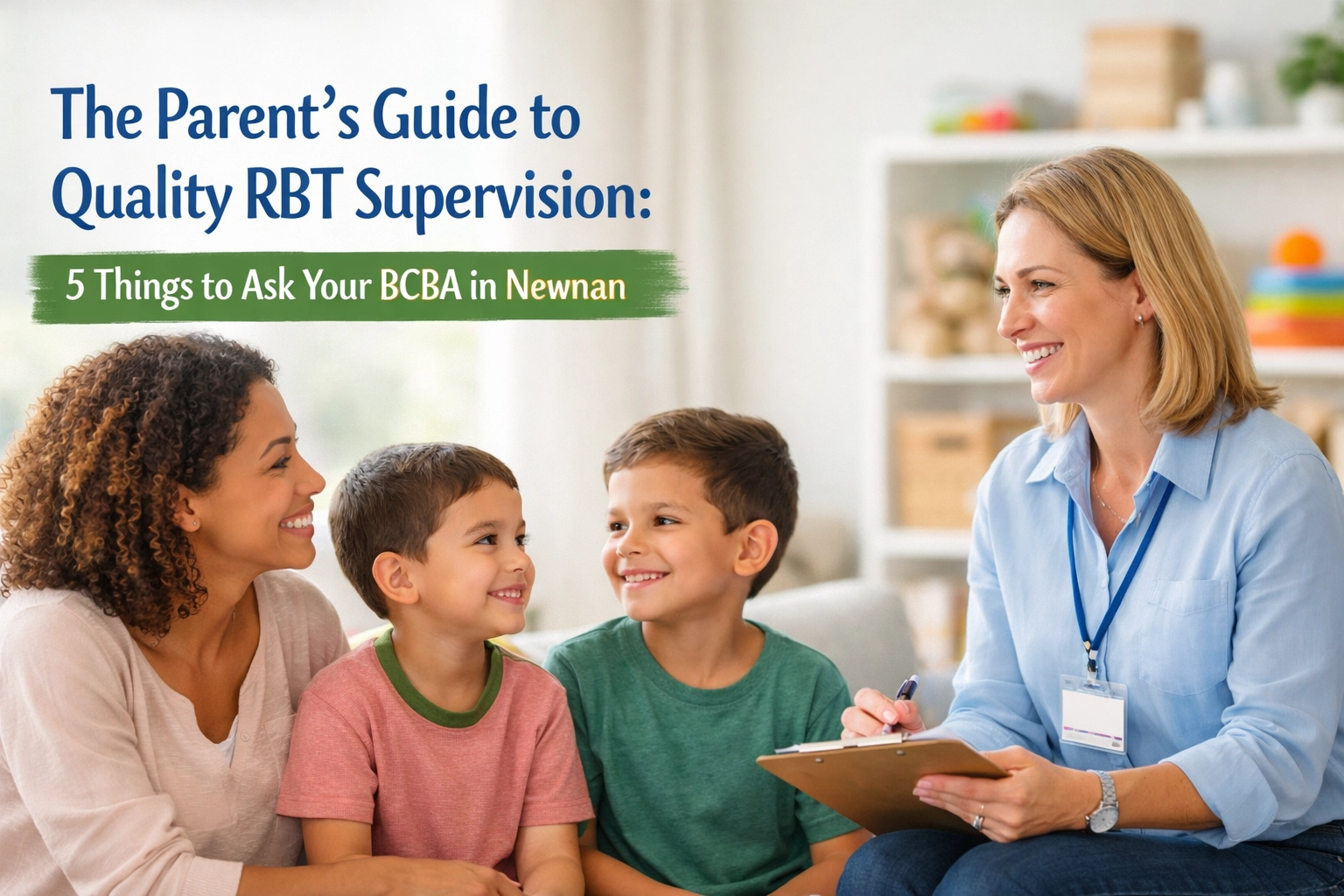
The Parent’s Guide to Quality RBT Supervision: 5 Things to Ask Your BCBA in Newnan
For families in Newnan navigating the world of Applied Behavior Analysis (ABA), understanding the structure of a clinical team is essential for progress. When a child begins services, they primarily interact with a Registered Behavior Technician (RBT). However, the backbone of any successful program is the supervision provided by the Board Certified Behavior Analyst (BCBA).
At Myers Assessment & Therapeutic Service (MATS), we believe that transparency is the foundation of effective therapy. Quality supervision isn't just a regulatory requirement; it is the mechanism that ensures therapy remains individualized, safe, and effective. Whether you are receiving services in-home or in a clinical setting in Coweta County, knowing what happens "behind the scenes" empowers you to advocate for your child’s needs.
Understanding the Roles: RBT vs. BCBA
Before diving into the questions, it is important to define the roles within a standard ABA team.
- Registered Behavior Technician (RBT): The RBT is the therapist who works directly with the child on a daily basis. They implement the behavior intervention plan (BIP) and collect data on specific goals.
- Board Certified Behavior Analyst (BCBA): The BCBA is the senior clinician. They conduct the initial Functional Behavior Assessment (FBA), design the treatment plan, and supervise the RBT to ensure the interventions are being applied correctly.
In Georgia, the standards for supervision are rigorous. The Behavior Analyst Certification Board (BACB) requires that RBTs receive supervision for at least 5% of the hours they spend providing behavior-analytic services each month. If your child receives 40 hours of therapy a month, the BCBA must provide at least 2 hours of direct supervision.

1. "How do you track and document the 5% supervision requirement?"
The first step in ensuring quality is verifying that the minimum standards are met. In the busy landscape of Georgia healthcare, documentation is the only way to prove that supervision is occurring.
Parents should feel comfortable asking about the system used to track these hours. A high-quality provider in Newnan will have a digital or paper log that records every instance of supervision. This log should include:
- The date and duration of the supervision.
- Whether the supervision was individual or in a group.
- Documentation of direct observation.
Transparency in documentation ensures that your child is not just "getting hours," but is receiving the clinical oversight necessary for behavioral breakthroughs. At MATS, we prioritize this data-driven approach across all our healthcare services.
2. "What does a typical supervision session look like for my child?"
Supervision is not a passive activity. It is not enough for a BCBA to simply sit in the room and check emails while the RBT works. Quality supervision must be active and engaging.
When you ask this question, look for the following components in their answer:
- Direct Observation: The BCBA should be watching the RBT implement specific programs with your child.
- Modeling: The BCBA should step in to demonstrate a new technique or a correction if the RBT is struggling with a specific behavior.
- Real-Time Feedback: After the session, or during natural breaks, the BCBA should provide the RBT with actionable feedback to improve their performance.
In Newnan, where families often juggle multiple therapies, ensuring that ABA time is maximized is crucial. If the supervision session sounds more like a "chat" than a clinical review, it may be time to reassess the quality of the oversight.

3. "How do you ensure the RBT is following the Behavior Intervention Plan (BIP) accurately?"
This is technically referred to as Treatment Integrity or Procedural Fidelity. If an RBT is not following the plan exactly as written, the data collected will be inaccurate, and your child’s progress may stall.
A BCBA should use specific checklists during their supervision to "grade" the RBT’s performance. Ask your BCBA:
- "Do you use a fidelity checklist?"
- "What happens if the RBT misses a step in the protocol?"
- "How do you retrain staff when the plan changes?"
Consistency is the key to behavioral change. This is especially true for children transitioning through various disability services or those involved in physical activities. If every person on the team isn't on the same page, the child receives mixed signals, which can lead to increased frustration and slower skill acquisition.
4. "How is supervision data used to update my child’s goals?"
Supervision is the primary time for a BCBA to analyze the data the RBT has been collecting. During these sessions, the BCBA looks for trends. Is the child mastering a skill quickly? Is a specific problem behavior increasing in frequency?
In Georgia, and specifically within the ABA therapy framework, goals should be dynamic. You should ask your BCBA:
- "Based on your last supervision, are we changing any of the current targets?"
- "Is the data showing that the current interventions are working, or do we need to pivot?"
A quality BCBA in the Newnan area will be able to show you graphs and data points that justify why a goal is being kept or modified. This level of clinical expertise is what separates professional ABA from simple "babysitting." It ensures that every hour of service is a step toward independence.

5. "What is your process for RBT professional development and ethical oversight?"
The field of ABA is constantly evolving. In 2026, new research and ethical guidelines continue to shape how we support neurodivergent individuals. A BCBA’s role includes being a mentor and an ethical gatekeeper for the RBT.
Ask about the ongoing training the RBT receives.
- Does the agency provide monthly workshops?
- How does the BCBA handle ethical dilemmas, such as maintaining professional boundaries in a home-based setting?
- Is the supervisor a BCBA who has completed the required 8-hour supervision training?
At Myers Assessment & Therapeutic Service (MATS), we emphasize the importance of allied healthcare standards. This means our supervisors are not just managers; they are educators committed to raising the bar for therapy in our local community.
Why Supervision Quality Matters in Newnan, GA
The Newnan and Peachtree City areas have seen a significant increase in ABA providers over the last few years. While more options are great for parents, it also means that the quality of supervision can vary wildly between agencies.
Under the Early and Periodic Screening, Diagnostic, and Treatment (EPSDT) benefit in Georgia, children are entitled to medically necessary ABA services. However, "medically necessary" implies that the services are high-quality and supervised by experts. If supervision is lacking, the hours billed to insurance or Medicaid may not be providing the clinical value your child deserves.

Red Flags to Watch For
While we strive for excellence at MATS, we want all Georgia parents to be informed consumers. Watch out for these red flags regarding RBT supervision:
- The "Ghost" Supervisor: You rarely see the BCBA, or they only show up for 15 minutes a month.
- Lack of Feedback: The RBT reports that the BCBA never gives them corrections or new ideas.
- Outdated Plans: The treatment plan hasn't been updated in six months, despite the child mastering most of their goals.
- No Data Review: The BCBA cannot explain the progress graphs or why certain behaviors are occurring.
Partnering with MATS for Superior Care
At MATS, our commitment to the Newnan community is rooted in clinical excellence and a friendly, supportive approach. We know that raising a child with unique needs requires a village, and that village must be led by competent, transparent professionals.
Our ABA therapy programs prioritize high supervision ratios. We ensure that our BCBAs are not overloaded with cases, allowing them the time to truly get to know your child and provide the RBTs with the mentorship they need to succeed.
If you are looking for more information on how to support your family, explore our community resources or learn more about our specific disability housing plans and support systems.
Final Thoughts for Parents
You are your child's best advocate. By asking these five questions, you signal to your clinical team that you are an active participant in the therapeutic process. Quality RBT supervision is the engine that drives progress; make sure your child's engine is being maintained by the best in the field.
If you’re ready to experience a higher standard of ABA therapy in Newnan, reach out to us today. Let’s work together to help your child reach their full potential.