
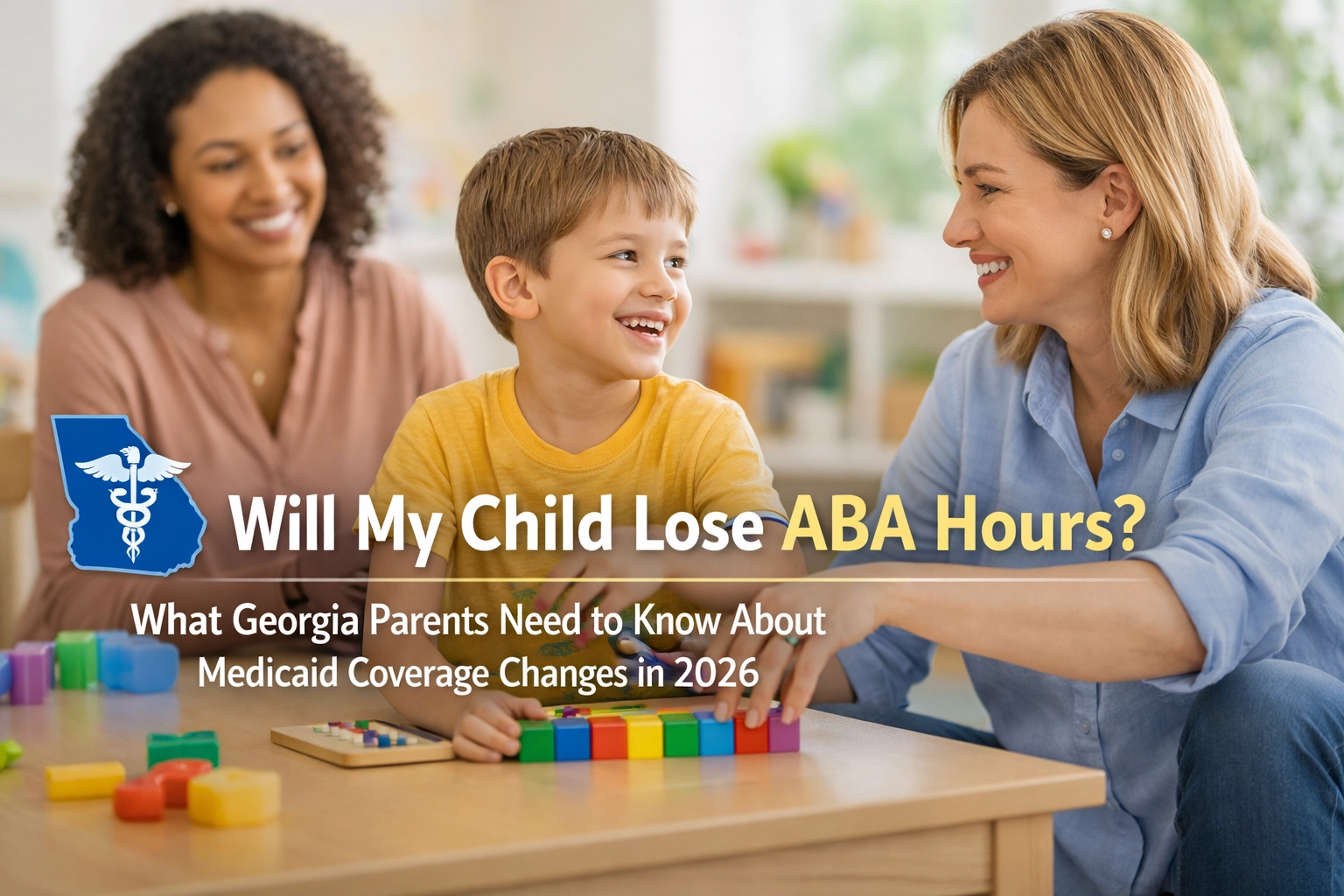
Will My Child Lose ABA Hours? What Georgia Parents Need to Know About Medicaid Coverage Changes in 2026
If you've been hearing talk about Medicaid changes in Georgia and you're worried about your child's ABA therapy hours, you're not alone.
Parents across the state are anxious. The questions keep coming: Will my child lose hours? Are they cutting coverage? What happens with reauthorization?
Here's what Georgia families need to know about Medicaid ABA coverage in 2026: and what you can do to protect your child's services.
What's Actually Changing in Georgia Medicaid in 2026?
Georgia's Pathways to Coverage Medicaid expansion program has been temporarily extended through December 31, 2026. This extension maintains current coverage levels but introduces uncertainty beyond that date.
There have been broader policy shifts across Medicaid programs nationwide. But here's the critical point: ABA therapy for children with autism remains a covered benefit under Georgia Medicaid.
The confusion stems from broader administrative changes: not from ABA-specific cuts.
What parents are actually concerned about:
- Potential budget adjustments
- Changes to prior authorization processes
- Reauthorization denials
- Hour reductions during reassessments
- Administrative delays
These are legitimate concerns. But they require context.

ABA Coverage Is Protected Under EPSDT
Here's the reassurance you need: ABA therapy is covered under EPSDT (Early and Periodic Screening, Diagnostic, and Treatment) for Medicaid-eligible children under age 21 in Georgia.
EPSDT is a comprehensive child health program that requires state Medicaid programs to cover medically necessary services for children: including behavioral health treatments like ABA therapy.
This federal mandate means Georgia Medicaid must cover ABA services when they are medically necessary for a child with autism spectrum disorder.
Key EPSDT protections:
- Coverage is comprehensive and child-centered
- Services must be provided to correct or ameliorate conditions
- Medical necessity: not budget limitations: determines coverage
- Children under 21 receive robust protections
Georgia law also requires private insurance companies to cover ABA therapy:
- Up to $35,000 per year for children up to age six
- Up to $30,000 per year for children over age six
But Medicaid coverage through EPSDT is often more flexible and based on individual need rather than these dollar caps.
Understanding Medical Necessity: Hours Are Based on Your Child's Needs
This is where many parents get confused.
Your child's ABA hours are not determined by a flat budget or arbitrary limits. They are determined by medical necessity: the clinical judgment that specific services are required to address your child's diagnosed condition.
Medical necessity is established through:
- Comprehensive assessments by a Board Certified Behavior Analyst (BCBA)
- Functional Behavior Assessments (FBAs) that identify skill deficits and problem behaviors
- Treatment plans that outline goals, interventions, and recommended hours
- Clinical documentation showing the need for intensive intervention
A BCBA evaluates your child's specific needs: communication delays, social skill deficits, adaptive behavior challenges, safety concerns: and recommends the appropriate level of service.
Common ABA service levels in Georgia:
- Comprehensive ABA: 25-40 hours per week for intensive early intervention
- Focused ABA: 10-25 hours per week for targeted skill development
- Maintenance services: 5-10 hours per week for skill maintenance and generalization
These hours are individualized. One child may need 30 hours weekly. Another may need 15. The determination is clinical: not budgetary.

The Reauthorization Process: Proving Progress Is Key
Here's where families run into trouble.
ABA therapy requires periodic reauthorization: typically every 6 to 12 months. During reauthorization, your provider must demonstrate that:
- Your child is making measurable progress toward treatment goals
- The current level of service remains medically necessary
- Continued treatment is appropriate based on clinical data
Georgia Medicaid reviews:
- Progress on individualized treatment goals
- Data collection and graphed outcomes
- Clinical notes and session summaries
- BCBA reassessments and updated treatment plans
If progress is documented clearly, reauthorization is typically approved. If documentation is weak, hours may be reduced or denied.
Common reasons for hour reductions:
- Insufficient progress data
- Goals achieved without updates to new targets
- Lack of caregiver participation or generalization
- Poor clinical documentation
- Infrequent BCBA oversight
This is why choosing the right ABA provider matters. Providers who maintain rigorous data collection and clinical oversight protect your child's hours.
How to Protect Your Child's ABA Hours in 2026
You are not powerless in this process.
Steps parents can take:
1. Stay actively involved in treatment.
Attend parent training sessions. Participate in updates. Ask questions about progress data.
2. Understand your child's current treatment plan.
Know the goals. Know the recommended hours. Know why those hours are necessary.
3. Request regular progress reports.
Don't wait for reauthorization. Ask for quarterly summaries of your child's data and progress.
4. Work with a provider who prioritizes clinical documentation.
Your provider's documentation determines reauthorization outcomes. Choose a team that takes this seriously.
5. Advocate during reauthorization.
If hours are reduced, you have the right to appeal. Request clinical justification. Provide additional documentation if needed.
6. Know your rights under EPSDT.
If Georgia Medicaid denies medically necessary ABA services for your child under 21, you can challenge that decision.

How MATS Helps Families Navigate Medicaid Reauthorizations
At Myers Assessment & Therapeutic Service (MATS), we understand the anxiety surrounding Medicaid coverage changes and reauthorization.
Our team ensures families receive the services their children need: without unnecessary hour reductions or administrative delays.
How we protect your child's coverage:
Comprehensive clinical documentation.
We maintain detailed session notes, progress data, and clinical justifications that meet Georgia Medicaid standards.
Proactive reauthorization planning.
We begin the reauthorization process early: tracking progress, updating goals, and preparing documentation well in advance of deadlines.
Clear communication with families.
We keep parents informed about treatment progress, reauthorization timelines, and any potential coverage issues.
BCBA oversight and individualized treatment plans.
Our BCBAs conduct regular assessments to ensure treatment remains clinically appropriate and medically necessary.
Support through appeals if necessary.
If hours are reduced or denied, we provide clinical justification and support families through the appeals process.
We serve families throughout Fayette County, including Tyrone, Fayetteville, Peachtree City, and surrounding Georgia communities. Our goal is simple: ensure your child receives the ABA therapy they need to make meaningful progress.
What You Should Do Right Now
If your child currently receives ABA therapy through Georgia Medicaid, take these steps:
Contact your provider.
Ask about their reauthorization process and timeline. Confirm that clinical documentation is up to date.
Review your child's treatment plan.
Make sure you understand current goals, progress, and recommended hours.
Stay informed about Georgia Medicaid updates.
Monitor communications from your managed care organization (MCO) and the Georgia Department of Behavioral Health and Developmental Disabilities.
Don't panic: but do prepare.
ABA coverage is not disappearing. But families who stay informed and work with strong clinical teams are best positioned to maintain services.
If you're concerned about your child's coverage or looking for a Georgia ABA provider that prioritizes clinical excellence and family support, reach out to MATS. We're here to help you navigate these changes and ensure your child continues to receive the care they need.
ABA therapy remains covered in Georgia. Medical necessity: not budget cuts: determines your child's hours. With the right provider and proactive planning, your child's services are protected.