
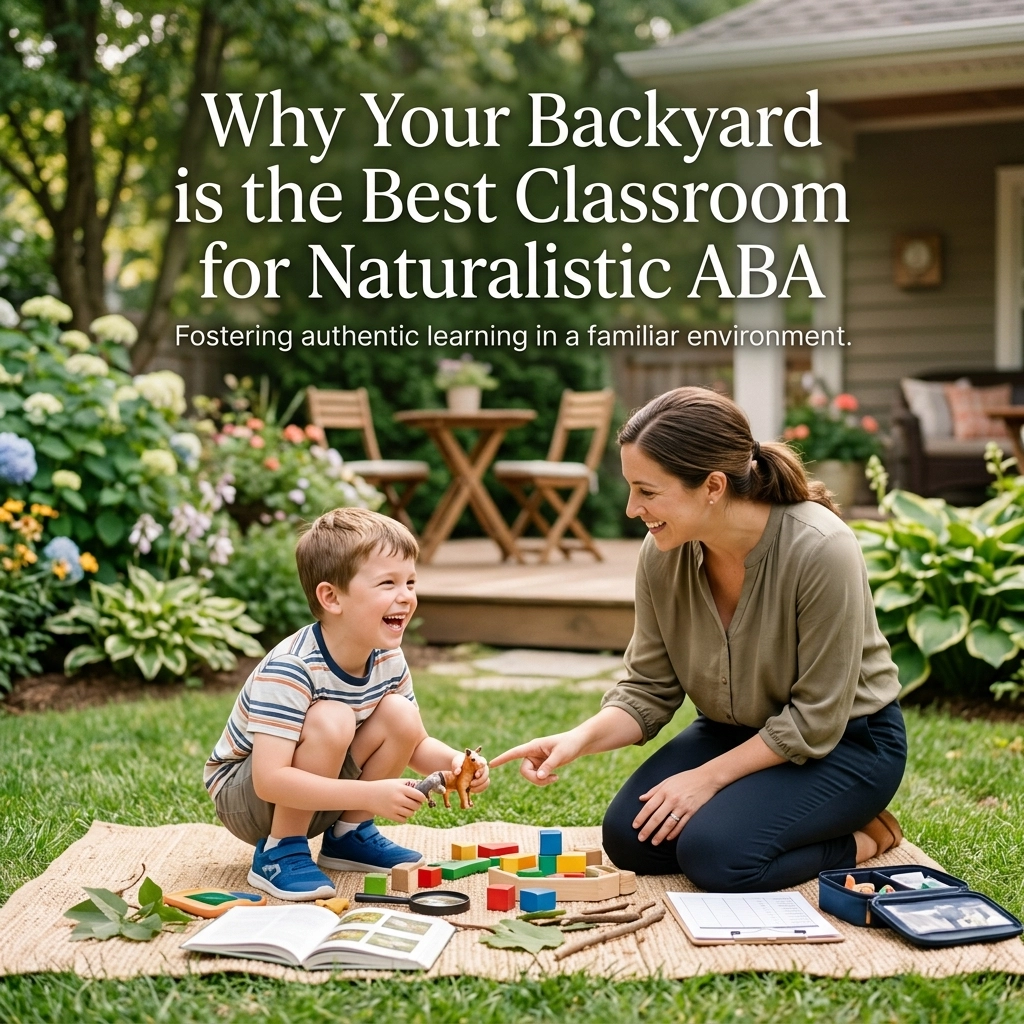
Why Your Backyard is the Best Classroom for Naturalistic ABA
Applied Behavior Analysis (ABA) has evolved significantly from the rigid, table-top-only interventions of the past. While Discrete Trial Training (DTT) remains a valuable tool for teaching specific, foundational skills, the shift toward Naturalistic Developmental Behavioral Interventions (NDBI) and Natural Environment Training (NET) has revolutionized how learners acquire and maintain skills. For many families in Georgia, the most effective therapeutic environment is not a windowless clinic room, but their own backyard.
At Myers Assessment & Therapeutic Service (MATS), we prioritize the integration of therapy into the daily lives of our clients. By utilizing the natural environment, we ensure that the progress made during sessions translates directly to real-world success. The backyard offers a unique, dynamic, and highly motivating landscape for children to develop communication, social, and functional living skills.
The Science of Natural Environment Training (NET)
Natural Environment Training (NET) is an evidence-based ABA methodology that focuses on teaching skills within the environments where they will naturally occur. Unlike DTT, which often utilizes arbitrary reinforcers (e.g., a piece of candy for identifying a color), NET utilizes natural reinforcers that are directly related to the activity.
If a learner is in the backyard and expresses a desire to use the swing, the Board Certified Behavior Analyst (BCBA) or Registered Behavior Technician (RBT) can use that motivation to teach "manding" (requesting). The reinforcement is the act of swinging itself. This creates a powerful, intrinsic connection between the behavior and the consequence.

Comparing DTT and NET in the Backyard
| Feature | Discrete Trial Training (DTT) | Natural Environment Training (NET) |
|---|---|---|
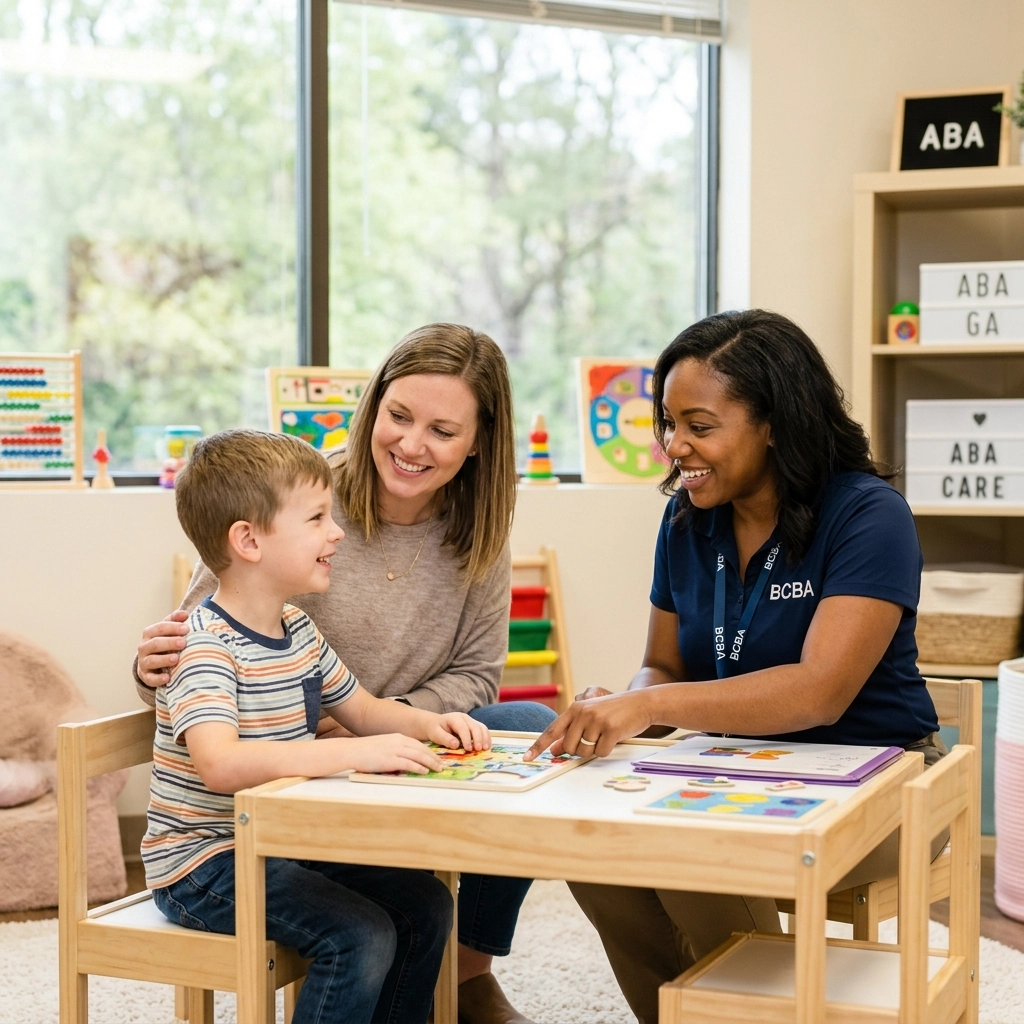
| Setting | Structured, often a table and chairs. | Natural settings like the backyard or park. |
| Instruction | Facilitator-led with specific prompts. | Child-led, following the learner's lead. |
| Reinforcement | Often extrinsic (edibles, tokens). | Intrinsic and natural to the activity. |
| Generalization | Requires deliberate planning to transfer skills. | Generalization is built-in from the start. |
| Focus | Rapid acquisition of discrete skills. | Functional application of skills in context. |
Why the Backyard Wins: Motivation and Engagement
The core of successful ABA therapy is motivation. In a clinical setting, an RBT often has to work hard to find "pairing" opportunities and identify items that will keep a child engaged. In a backyard, the motivation is often built-in.
Whether it is a sandbox, a trampoline, or simply observing insects in the grass, the backyard provides a wealth of naturalistic teaching opportunities. When a child is genuinely interested in what they are doing, their "latency" (the time between a demand and a response) decreases, and their overall rate of learning increases.
Capturing vs. Contriving Motivation
In the backyard, a therapist can "capture" a naturally occurring moment of interest. If a child sees a bird, the therapist can work on tacting (labeling) or observational social skills.
Alternatively, a therapist can "contrive" a situation. By placing a favorite ball just out of reach on a play set, the therapist creates a functional need for the child to use their communication skills. This method ensures that the learner views therapy not as a chore, but as an extension of their play.
Generalization: Solving the "Clinic-Only" Problem
One of the greatest challenges in ABA is generalization. Many learners can perform a skill perfectly in a quiet clinic with their favorite RBT but struggle to perform that same skill at home or in the community.
By conducting sessions in the backyard, we bypass this hurdle. The learner is practicing skills in the exact location where they are expected to use them. This is particularly vital for families in the Georgia area who want their children to participate in local community events, backyard BBQs, and neighborhood playdates.
Skills That Thrive Outdoors
- Gross Motor Skills: Navigating uneven terrain, climbing, and jumping.
- Social Skills: Turn-taking on a slide or playing "hide and seek."
- Safety Skills: Staying within boundaries and responding to "stop" or "come here" in an open space.
- Functional Communication: Asking for help with a jammed toy or requesting a turn.

Enhancing Sensory Integration and Regulation
Many children receiving ABA services also navigate sensory processing challenges. The clinical environment can sometimes be sterile or, conversely, over-stimulating with artificial lights and echoes.
The backyard provides a variety of natural sensory inputs that can be used to help a child regulate. The feeling of grass, the sound of wind, and the heavy work involved in moving outdoor toys all contribute to a child's vestibular and proprioceptive development. Our team at Myers Assessment & Therapeutic Service (MATS) often incorporates these elements into a child's Behavior Intervention Plan (BIP) to support emotional regulation.
The Role of the BCBA and RBT in Outdoor Sessions
Supervision is key to effective NET. A BCBA must carefully design the environment to ensure it remains a "learning" environment and not just "playtime." This involves:
- Environmental Arrangement: Organizing outdoor toys to encourage communication.
- Data Collection: Tracking progress on mobile devices while remaining engaged with the learner.
- Parent Training: Showing caregivers how to turn a simple afternoon outside into a series of small "wins" for their child.
For families looking for specialized support, exploring our services sitemap can provide more insight into how we tailor these outdoor sessions to meet individual needs.

Addressing Safety and Boundaries in Georgia
In Georgia, where many homes have spacious yards, teaching safety boundaries is a high-priority functional skill. Elopement (running away) is a significant concern for many families in our community.
Using the backyard as a classroom allows the RBT to work on "staying in the green zone" or "stopping at the fence" in a safe, supervised manner. These are life-saving skills that are difficult to simulate in a small indoor therapy room. We focus on these high-stakes behaviors to ensure the safety of every child we serve in the Metro Atlanta area and beyond.
How to Get Started with Home-Based ABA
If your child is currently receiving services in a clinic, it may be time to discuss the benefits of Natural Environment Training with your provider. At MATS, we believe in a balanced approach that meets the child where they are, literally.
Whether you are navigating the post-sitemap for more educational resources or looking for specific product categories related to therapy tools, our goal is to empower Georgia families with the knowledge they need to succeed.
Steps to Transition to Backyard Therapy:
- Consult your BCBA: Review the current treatment plan and identify goals that can be met outdoors.
- Prepare the Space: Ensure the backyard is safe and contains items that motivate your child.
- Set Clear Expectations: Understand that outdoor therapy may look different than "table work," but the data-driven results are just as rigorous.

Conclusion: Emphasizing Real-World Outcomes
The ultimate goal of ABA is to increase a child's independence and improve their quality of life. By stepping out of the clinic and into the backyard, we are not just teaching "skills", we are teaching a child how to navigate their world.
At Myers Assessment & Therapeutic Service (MATS), we are committed to providing the highest quality of care to families across Georgia. We utilize every tool at our disposal, including the swing set and the sandbox, to ensure your child reaches their full potential.
For more information on our approach or to schedule an assessment, please visit our homepage or reach out to our clinical team directly. Let’s turn your backyard into the most productive classroom your child has ever had.