

Naturalistic ABA Vs. Traditional Clinic Therapy: Which Is Better for Your Peachtree City Child?
For parents in Peachtree City, Georgia, navigating the world of Autism Spectrum Disorder (ASD) interventions often leads to one primary recommendation: Applied Behavior Analysis (ABA). However, as families begin their research, they quickly discover that ABA is not a monolithic practice. There are various methodologies, most notably Traditional Clinic-Based Therapy (often utilizing Discrete Trial Training) and Naturalistic Developmental Behavioral Interventions (NDBI), commonly referred to as Naturalistic ABA or Natural Environment Teaching (NET).
Choosing the right approach is a critical decision for your child’s developmental trajectory. At Myers Assessment & Therapeutic Service (MATS), we specialize in evidence-based practices that prioritize functional outcomes. Understanding the nuances between these two methodologies allows families to make informed decisions that align with their child’s unique learning style and the lifestyle of the Fayette County community.
Defining the Traditional Approach: Discrete Trial Training (DTT)
Traditional ABA is frequently associated with Discrete Trial Training (DTT). This method is highly structured and typically occurs in a controlled clinic setting. In a DTT session, a Board Certified Behavior Analyst (BCBA) or Registered Behavior Technician (RBT) breaks down complex skills into small, "discrete" components.
Each "trial" follows a specific pattern:
- Antecedent: The therapist provides a clear instruction (e.g., "Touch blue").
- Prompt: The therapist assists the child if necessary.
- Response: The child performs the behavior.
- Consequence: The child receives a reward (reinforcement) for a correct response or a correction for an incorrect one.
The Benefits of Traditional Structure
The primary advantage of DTT is its efficiency in teaching foundational skills. Because the environment is controlled, distractions are minimized. This allows children who struggle with focus to attend to specific tasks. It is an excellent tool for teaching early learner skills, such as matching, imitation, and basic receptive language.
The Challenges of the "Clinic Bubble"
The most significant criticism of traditional DTT is the "generalization gap." A child may learn to identify a "chair" in a clinical setting using a specific set of flashcards but may fail to recognize a chair in their own living room or at a local Peachtree City restaurant. Because the reinforcement is often "contrived" (e.g., giving a child a skittles for identifying a picture), the child may not see the functional value of the skill in the real world.

What is Naturalistic ABA (NET)?
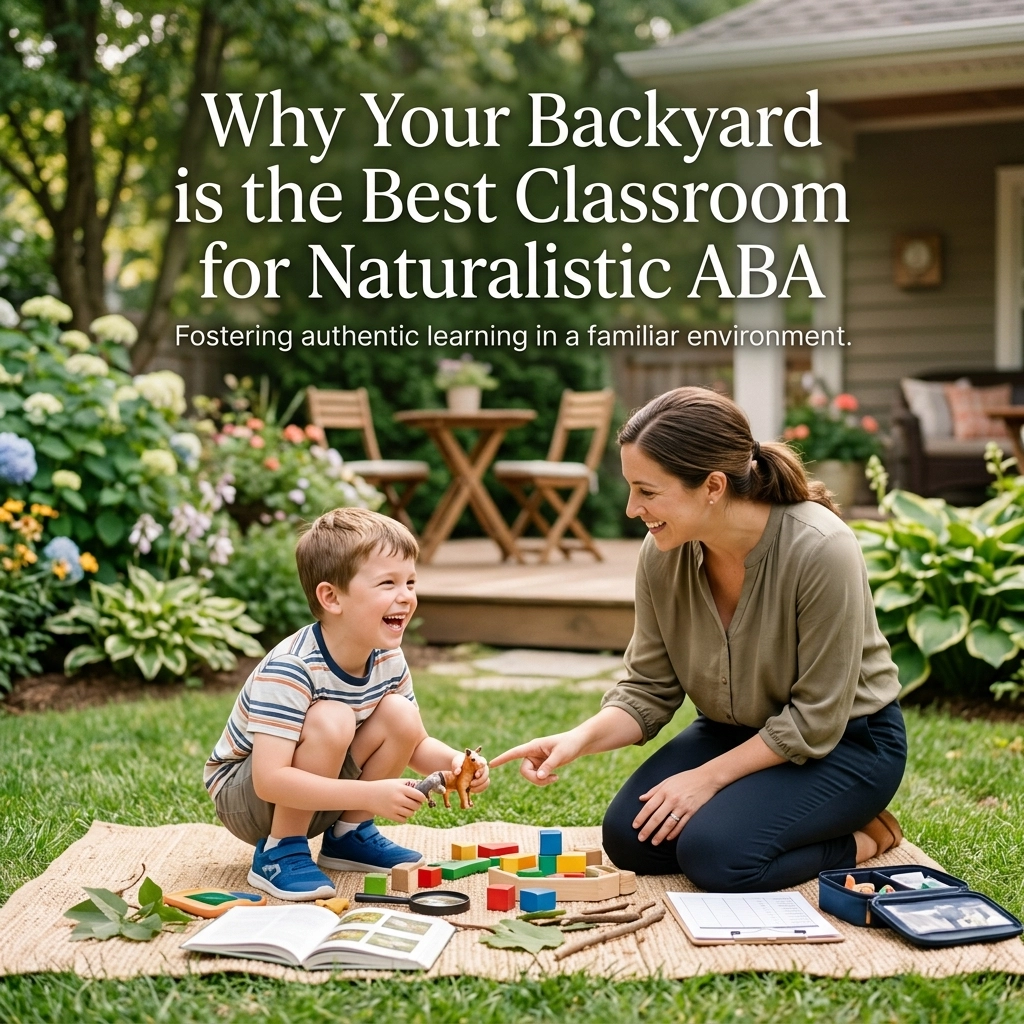
Naturalistic ABA therapy Georgia programs, such as those offered by MATS, take a different approach. Instead of sitting at a desk, the "classroom" is the child's natural environment: the playroom, the backyard, or even a trip to the local park.
Naturalistic teaching (NET) focuses on following the child's lead. If a child is interested in playing with a train set, the therapist uses that motivation to teach counting, turn-taking, or color identification. The learning is embedded into play and daily routines.
Key Characteristics of Naturalistic ABA:
- Child-Led: The therapist follows the child’s interests and motivation.
- Natural Reinforcement: The reward is directly related to the activity. If a child asks for a "ball," the reinforcement is getting to play with the ball, not a unrelated piece of candy.
- Contextual Learning: Skills are taught in the locations where they will actually be used.
- Loose Training: Instructions are varied to help the child understand that "put it away" means the same thing whether they are cleaning up blocks or putting a shirt in a hamper.
Comparing the Two: A Side-by-Side Look
| Feature | Traditional ABA (DTT) | Naturalistic ABA (NET) |
|---|---|---|
| Setting | Structured Clinic/Desk | Home, Community, Play Area |
| Instruction | Adult-Led | Child-Led |
| Reinforcement | Contrived (Snacks, Tokens) | Natural (Access to toys/activities) |
| Generalization | Requires specific "generalization phases" | Built-in from day one |
| Goal | Skill acquisition through repetition | Functional communication and independence |
Why Generalization Matters for Peachtree City Families
Peachtree City is a unique community characterized by its golf cart paths, active parks like Allbright Park, and family-oriented shopping centers. For a child with autism, the goal of therapy is not just to perform tasks in a 10×10 therapy room. The goal is to navigate a golf cart ride safely, interact with peers at the playground, and follow instructions during a family outing.
ABA therapy Peachtree City GA services that utilize naturalistic methods prioritize these real-world transitions. When therapy happens in the home or community, the child learns to respond to the natural cues of their environment. This reduces the "robotic" responding sometimes seen in strictly traditional programs and fosters true independence.

The MATS Philosophy: A Hybrid Approach
At Myers Assessment & Therapeutic Service (MATS), we believe the "Naturalistic vs. Traditional" debate is often a false dichotomy. The most effective clinical programs are those that are individualized.
For many children, a hybrid approach is most beneficial. We may use short periods of structured DTT to master a difficult foundational concept, but the vast majority of our sessions are spent in Naturalistic Environment Teaching. This ensures that every skill learned is immediately applied to the child’s actual life.
Why Choose MATS for Naturalistic ABA?
- Local Expertise: We understand the specific resources and challenges available to Georgia families.
- Parent Partnership: Naturalistic ABA requires heavy parent involvement. We don't just work with your child; we coach you on how to turn everyday moments into learning opportunities.
- Functional Outcomes: We focus on the "why" behind every goal. If a skill doesn't improve the child's quality of life or increase their independence, we pivot.
Is Naturalistic ABA Right for Your Child?
While Naturalistic ABA is widely considered the gold standard for promoting generalization and reducing prompt dependency, every child is different.
Naturalistic ABA may be the best fit if:
- Your child shows resistance to "table time" or highly structured tasks.
- Your child struggles to use skills learned in therapy when they are at home or in public.
- Your child’s primary goals involve social communication and play.
- You want to be an active participant in your child’s daily therapy routines.
Traditional (DTT) elements might be prioritized if:
- Your child needs a very high rate of reinforcement to stay engaged.
- Your child is in the very early stages of learning how to learn (attending to a speaker, sitting for short periods).
- The environment needs to be strictly controlled to manage high-intensity interfering behaviors.

Navigating the Georgia Therapy Landscape
Finding the right provider for ABA therapy Peachtree City GA involves more than just checking an insurance list. Families should ask potential providers about their "Generalization Plan." If a clinic cannot explain how they move skills from the desk to the real world, your child may spend hundreds of hours learning skills they never use outside of that building.
At MATS, we are committed to transparency and evidence-based care. We encourage families to explore our About Us page to learn more about our clinical philosophy and our dedication to the Peachtree City and surrounding Georgia communities.
Conclusion: Putting Your Child First
The choice between Naturalistic and Traditional ABA shouldn't be about which "brand" of therapy is trending. It should be about which method helps your child communicate their needs, make friends, and participate in the life of your family.
For most families in Peachtree City, the flexibility and real-world application of Naturalistic ABA provide the most sustainable path to progress. By utilizing the child's natural environment and interests, we transform therapy from a "chore" into a series of meaningful, engaging successes.
If you are ready to see how a naturalistic approach can benefit your child, contact Myers Assessment & Therapeutic Service today. Let’s move beyond the clinic walls and start building a more independent future for your child in the heart of Georgia.