
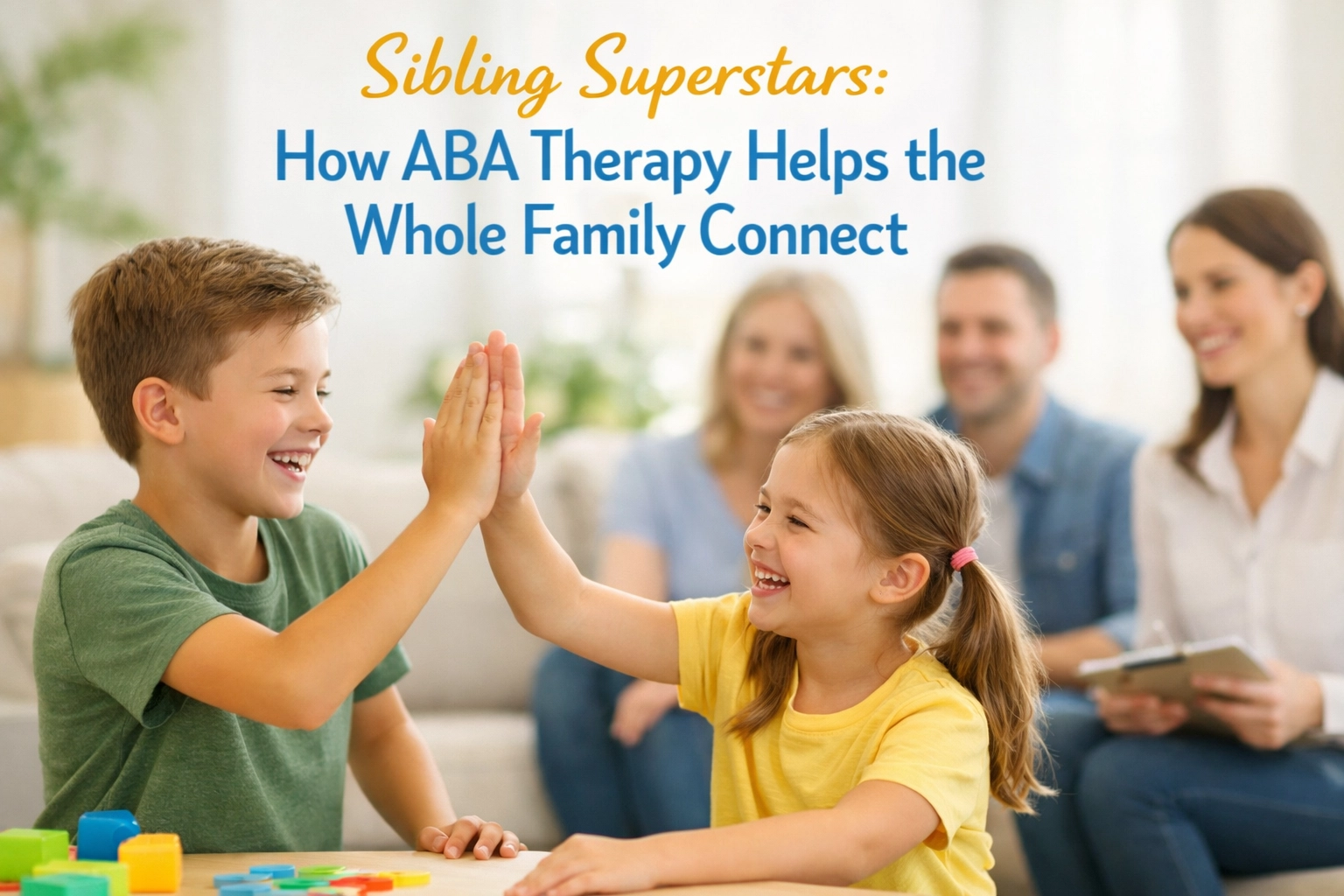
Sibling Superstars: How ABA Therapy Helps the Whole Family Connect
At Myers Assessment & Therapeutic Service (MATS), we believe that autism doesn't just impact a child: it shapes the lives of the entire family. When we start a new Applied Behavior Analysis (ABA) program, the focus is often on the individual learner. However, the real magic happens when we bring the whole crew into the fold, especially the siblings.
Siblings are the unsung heroes of the therapy journey. They are playmates, protectors, and sometimes, the best teachers a child could ask for. By involving siblings in the therapeutic process, we aren't just teaching one child new skills; we are building a more cohesive, empathetic, and connected household.
In this post, we’ll explore how our family-centered approach in Georgia helps siblings become "superstars" and how ABA therapy creates lasting bonds for everyone under your roof.
The Power of the Sibling Bond
The relationship between siblings is often the longest-lasting relationship a person will ever have. It is a unique training ground for social interaction. For a neurodivergent child, a sibling provides a constant, "built-in" peer to practice with every day.
In the world of ABA, we use a concept called Natural Environment Teaching (NET). This means we take the skills learned in a structured setting and apply them to real-life situations: like the living room floor or the backyard. Siblings are the natural leaders of this environment. They speak the same "language" of play, and their presence makes the learning process feel less like a "session" and more like life.
Why Sibling Involvement Matters:
- Consistency: Siblings are there during breakfast, bath time, and everything in between.
- Motivation: Often, a child is more motivated to work for a turn with their brother’s toy than for a standard reinforcer.
- Generalization: When a child learns to share with an RBT (Registered Behavior Technician), that's great. When they learn to share with their sister, that’s a life-changing win.

Turning Siblings into Therapeutic Allies
One of the core pillars of the MATS approach is Family Involvement. We don't want siblings to feel like they are on the sidelines watching their brother or sister get all the attention. Instead, we invite them to be active participants and therapeutic allies.
When siblings understand the "why" behind certain behaviors, the dynamic in the home shifts from frustration to collaboration. Through guided participation, siblings learn how to use prompting and reinforcement in ways that feel natural.
How Siblings Help in Therapy:
- Acting as Natural Role Models: Siblings model appropriate social behaviors, language, and play skills.
- Supporting Communication: They learn to recognize non-verbal cues and help their sibling use their AAC (Augmentative and Alternative Communication) device or signs.
- Encouraging Social Reciprocity: Simple games like tag or "hide and seek" become opportunities to practice turn-taking and joint attention.
- Assisting with Transitions: A sibling’s "Come on, let’s go!" is often more effective than a parent’s instruction.
By including the whole family, we ensure that the progress made during hours of therapy doesn't disappear the moment the clinician leaves your Peachtree City or Newnan home.
Bridging the Communication Gap
Communication is the foundation of any relationship. When a child has difficulty expressing their needs or understanding others, it can lead to a "gap" between siblings. One child might feel ignored, while the other feels overwhelmed.
ABA therapy focuses heavily on Functional Communication Training (FCT). At MATS, we teach siblings how to communicate effectively with each other. This might mean teaching a neurotypical sibling to wait longer for a response or showing them how to offer choices rather than making demands.
When siblings learn to "speak each other's language," the household tension drops. The "superstar" sibling gains a sense of pride in knowing they can help their brother or sister be heard. This success strengthens the emotional bond and fosters a deep sense of belonging for both children.

Building Empathy and Compassion
Autism can be confusing for young children. They might wonder why their sibling gets to play with a "special" iPad or why they sometimes have intense meltdowns. Without information, these feelings can turn into resentment or jealousy.
Education is the antidote to confusion. At MATS, we provide age-appropriate explanations of autism to siblings. We talk about:
- Sensory Sensitivities: Why loud noises or certain textures are hard for their sibling.
- Communication Differences: Why their sibling might use pictures to talk instead of words.
- Behavioral Functions: Helping them understand that a "tantrum" is often a way of asking for help.
This knowledge transforms the sibling's perspective. They move from asking "Why is my sibling doing that?" to "How can I help my sibling right now?" This creates a culture of compassion that will serve them for the rest of their lives.
Supporting the "Superstar" Sibling’s Needs
While we focus on the child receiving direct services, we are always mindful of the neurotypical sibling's emotional health. Being a "superstar" sibling is a big job, and it can sometimes feel heavy.
Our BCBAs (Board Certified Behavior Analysts) work with parents to ensure the balance of the home remains healthy. This includes:
- Individualized Attention: Encouraging parents to schedule "special time" for the neurotypical sibling.
- Safe Spaces: Helping families create areas where each child can play without interruption.
- Validating Emotions: Giving siblings a safe place to express their frustrations or fears.
We want every member of the family to feel supported. For more information on how we structure our programs to include the whole family, check out our services-sitemap.xml or browse our page-sitemap.xml for program details.

The MATS Approach: Family-First Therapy in Georgia
At Myers Assessment & Therapeutic Service, we aren't just providing a service; we are joining your team. We understand the unique challenges faced by Georgia families, from navigating school systems to finding inclusive community events in the Newnan and Peachtree City areas.
Our approach is built on transparency and collaboration. We believe that a Behavior Intervention Plan (BIP) is only as good as its ability to be used by the family in the real world. If a strategy doesn't work for your lifestyle or your other children, we pivot.
What Family-Centered ABA Looks Like at MATS:
- Parent Training: We empower you with the tools to manage behaviors and celebrate wins.
- Sibling Integration: We create play-based goals that involve brothers and sisters.
- Home-Based Services: We work in your environment, where life actually happens.
- Community Outreach: We help your whole family navigate the world together with confidence.
Whether you are just starting your journey or looking for a more inclusive provider, we are here to help. You can view our archive of resources at post-archive-sitemap.xml or see our full list of categories at category-sitemap.xml.

Celebrating the Whole Family Win
Success in ABA therapy isn't just about a child hitting a milestone on a graph. It's about the first time two siblings play a game of catch without a meltdown. It’s about the quiet moment when an older sister holds her brother’s hand because she knows he’s feeling anxious in a crowd. It’s about the family finally feeling like they can go out to dinner together in downtown Newnan.
These "whole family wins" are what drive us. When we support the siblings, we support the child. When we support the parents, we support the child. By treating the family as a unit, we create a foundation for long-term independence and happiness.
If you’re ready to see how a family-centered ABA approach can change the dynamic in your home, reach out to us. Your family's journey is unique, and we are honored to be a part of it.
For more information on our specific services and how we can support your "Sibling Superstars," visit our main sitemap.xml or explore our post-sitemap.xml for more helpful articles.
Summary of Benefits for the Entire Family:
| Benefit | How ABA Facilitates It | Result |
|---|---|---|
| Increased Harmony | Teaching siblings to communicate and play together. | Fewer conflicts and a calmer home environment. |
| Greater Empathy | Educating siblings on autism and sensory needs. | Compassionate, supportive sibling relationships. |
| Skill Generalization | Practicing therapy goals during family routines. | Faster progress and more "real world" success. |
| Empowered Parents | Providing strategies that work for the whole household. | Reduced parental stress and increased confidence. |

At MATS, we don’t just see a diagnosis: we see a family. Let’s work together to make every member of your family a superstar. Reach out today to learn more about our Georgia-based services and how we can help your family connect in ways you never thought possible.