
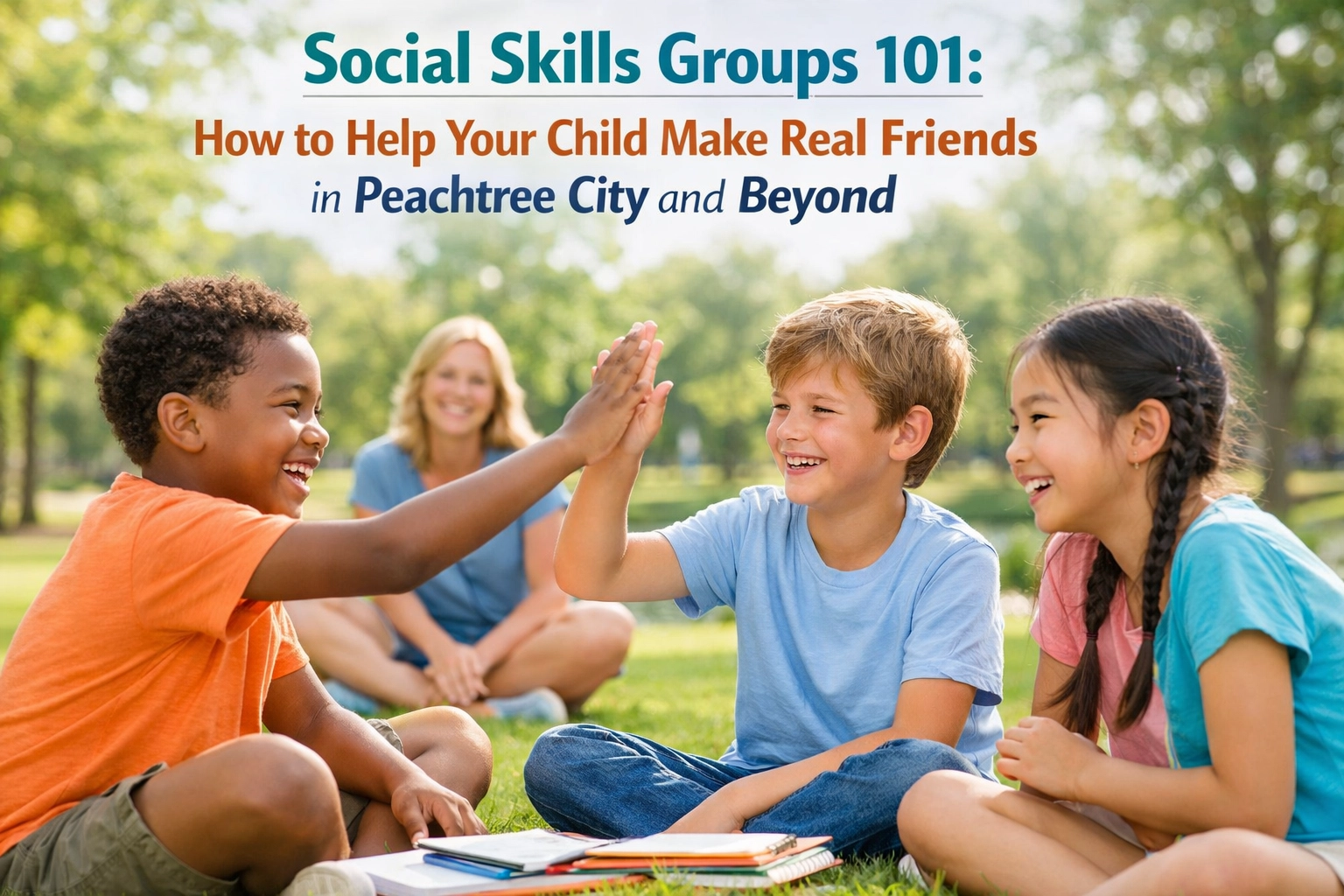
Social Skills Groups 101: How to Help Your Child Make Real Friends in Peachtree City and Beyond
Social interaction is often viewed as a natural, intuitive process. For many children in the neurodivergent community, however, navigating peer relationships requires intentional instruction and structured practice.
In Peachtree City and surrounding Fayette County, families are increasingly seeking evidence-based solutions to help their children move beyond parallel play toward meaningful, lasting friendships. Social skills groups represent a specialized therapeutic intervention designed to bridge this gap.
These groups are not merely playdates. They are clinically supervised environments where social pragmatics are broken down into teachable, repeatable steps.
What Are Social Skills Groups?
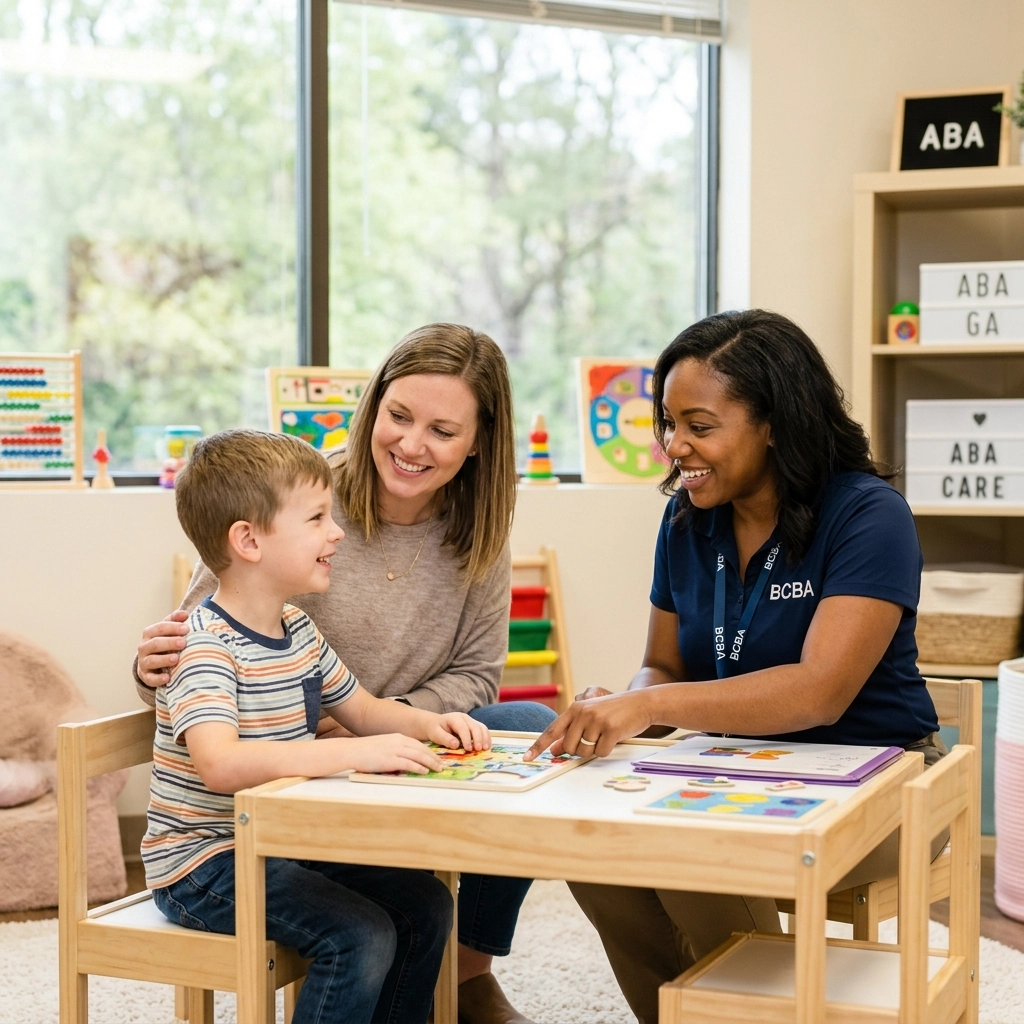
A social skills group is a structured therapy session involving small cohorts of peers, typically ranging from four to six participants. These groups are often led by professionals such as Board Certified Behavior Analysts (BCBAs) or Registered Behavior Technicians (RBTs).
The primary objective is to teach children how to interact effectively with others in a supportive, controlled setting. At Myers Assessment & Therapeutic Service (MATS), we focus on the foundational abilities required for social success.

Key areas of focus often include conversational skills, understanding non-verbal social cues, and mastering the nuances of turn-taking. For children in Georgia, developing these competencies is essential for navigating both the classroom and community environments.
The group format allows for peer modeling, where children observe and imitate appropriate social behaviors exhibited by their peers. This dynamic is difficult to replicate in one-on-one therapy sessions.
The Importance of Localized Support in Georgia
Navigating the landscape of autism services Georgia offers can be overwhelming for parents in Coweta and Fayette County. Finding a provider that understands the local educational system and community resources is vital.
Social challenges often become most apparent in structured environments like the Fayette County School System or during local extracurricular activities. By participating in local groups, children practice skills they can immediately apply at spots like The Avenue Peachtree City or local parks.
We prioritize the Georgia market because we understand the specific challenges families face regarding IEP goals and social transitions within our local schools. Integrating clinic-based progress with community-based reality is our specialty.
Why Choose a Group Model Over Individual Therapy?
While individual ABA therapy is excellent for teaching discrete skills, social competence requires a "live" audience. A group setting provides the necessary distractions and unpredictability found in the real world.
Immediate Feedback: In a group, a child receives real-time feedback from both the therapist and their peers. If a child forgets to wait their turn during a game, the natural consequence, a peer expressing frustration, becomes a powerful teaching moment.
Generalization: One of the biggest hurdles in Applied Behavior Analysis (ABA) is generalization. A child might master a skill with a therapist but fail to use it with a friend. Groups force the generalization of skills across different people and social contexts.
Confidence Building: Success breeds confidence. As children master small social wins, such as initiating a conversation or successfully resolving a conflict, their self-esteem grows.

Key Components of Effective Social Skills Programming
Not all social groups are created equal. High-quality social skills groups Georgia families trust should include several evidence-based components.
1. Structured Learning Environments
Sessions must follow a predictable schedule. This usually includes a "check-in," a specific lesson (e.g., "how to join a group"), a guided activity, and a "check-out" or reflection period.
2. Role-Playing and Scripting
We use role-playing to simulate real-life scenarios, such as ordering food at a local restaurant or asking a classmate to play at recess. Scripting provides the linguistic "tools" children need to start these interactions.
3. Emotional Regulation Support
Socializing is stressful. Effective programs teach children to recognize their own internal states. We help them manage anxiety and sensory overstimulation, ensuring they stay "available" for social learning.
4. Community-Based Practice
The best learning happens outside the clinic walls. At MATS, we emphasize community outings. These supervised trips allow children to practice their skills in natural settings like Line Creek Nature Area or local libraries.
The MATS Approach: Saturday Social Skills Groups
At Myers Assessment & Therapeutic Service (MATS), located at 361 Highway 74 North, Suite 104 in Peachtree City, we offer specialized Saturday Social Skills Groups. These are typically 8–12 week cycles.
Each session lasts between 60 and 90 minutes. This duration is optimal for maintaining focus while allowing enough time for deep-dive social exercises. We believe in high-intensity, high-engagement sessions that keep children motivated.
Our team, including experts like Lukas Huston, focuses on creating a "brave space" where children feel safe making mistakes. Socializing involves trial and error, and our clinic provides the safety net needed for that exploration.

Addressing the Barriers: From Waitlists to Insurance
Many families feel stuck on the Georgia NOW/COMP Waiver waitlist, feeling as though they have no options. However, many private insurance plans cover social skills groups under the umbrella of ABA therapy.
Proving "medical necessity" is the key to unlocking these benefits. Insurance companies want to see that the social deficits are impacting the child’s functional independence. We assist families in documenting these needs to ensure access to our allied healthcare services.
If you are navigating the complexities of authorizations, our team can provide guidance on proving the clinical need for group-based intervention.
5 Steps to Reinforce Social Skills at Home
Therapy is the spark, but the home environment is the fuel. Parents play a critical role in the success of any social skills intervention.
1. Arrange Structured Playdates: Start with one familiar peer. Keep the duration short (30–60 minutes) and have a specific activity planned, like a board game or a craft, to provide a natural social "anchor."
2. Use Visual Supports: Charts and social stories can help prepare your child for upcoming social events. Knowing what to expect reduces the anxiety that often leads to social withdrawal.
3. Specific Praise: Instead of saying "good job," say, "I really liked how you looked at your friend when they were talking." Specificity helps the child identify exactly which behavior was successful.
4. Modeling at Home: Children are always watching. Model how to handle a disagreement with a spouse or how to greet a neighbor. Narrate your actions: "I'm going to wait until she finishes her sentence before I speak."
5. Practice Emotional Labeling: Use mirrors or flashcards to explore different facial expressions. Understanding the difference between "frustrated" and "tired" is a prerequisite for empathy and social responding.

Connecting School and Therapy
In Peachtree City and Newnan, we frequently see a gap between a child's IEP goals and their clinical therapy goals. Our goal is to bridge that gap.
We encourage parents to share their child's school goals with us. This allows our BCBAs to tailor the social group curriculum to support the skills being targeted in the classroom. This unified approach accelerates progress.
Whether your child needs help with domestic assistance or is participating in physical activities, social competence is the thread that ties all these services together.
Finding the Right Fit in Fayette and Coweta County
When searching for autism services Georgia, proximity matters. Having a provider right here in Peachtree City means less time in traffic and more time for your child to engage in the community.
Aside from MATS, other local resources include Brain Balance and The Life Change Group. Each offers unique perspectives on social development. We recommend families research and visit facilities to see which environment feels most supportive for their specific child.
Our team is always available to discuss how our specific Saturday groups can meet your family's needs. We pride ourselves on a friendly, welcoming atmosphere that puts both parents and children at ease.
Conclusion: The Path to Meaningful Connection
Friendship is not a luxury; it is a fundamental human need. For children who struggle with social communication, the world can feel like a confusing or isolating place.
Social skills groups provide the map and the compass. By teaching the "how" of social interaction in a structured, supportive environment, we empower children to build the "who": the relationships that will sustain them throughout their lives.
If you’re ready to help your child find their tribe in Peachtree City, start by looking at the data-driven, compassionate programs available right in your backyard.
For more information on our services or to learn about our about us page, visit our website. Let’s work together to make "real friends" a reality for your child.