


5 Steps: How to Manage Challenging Behavior and Keep Your Home Safe (Easy Guide for Georgia Parents)
For many families navigating the world of neurodivergence, daily life can feel like a series of unpredictable crises. Whether you are currently on a waitlist for autism services Georgia or you are already receiving support, managing severe challenging behaviors at home is a significant undertaking. At Myers Assessment & Therapeutic Service (MATS), we recognize that the safety of the household is the foundation upon which all other therapeutic progress is built.
Challenging behaviors: ranging from non-compliance and tantrums to aggression and self-injury: are often a form of communication. When a child lacks the verbal or emotional tools to express a need, they use behavior to bridge the gap. For parents in Fayette County and the surrounding areas, implementing clinical strategies at home can bridge the gap between professional sessions and daily living.
Here are five evidence-based steps to manage challenging behavior and ensure a safe, therapeutic environment for your family.
1. Establish Predictability Through Environmental Antecedents
In the world of Applied Behavior Analysis (ABA), we often look at "Antecedents": what happens immediately before a behavior occurs. One of the most common triggers for challenging behavior in children with autism is unpredictability. When a child does not know what is coming next, their anxiety increases, often manifesting as physical acting out.
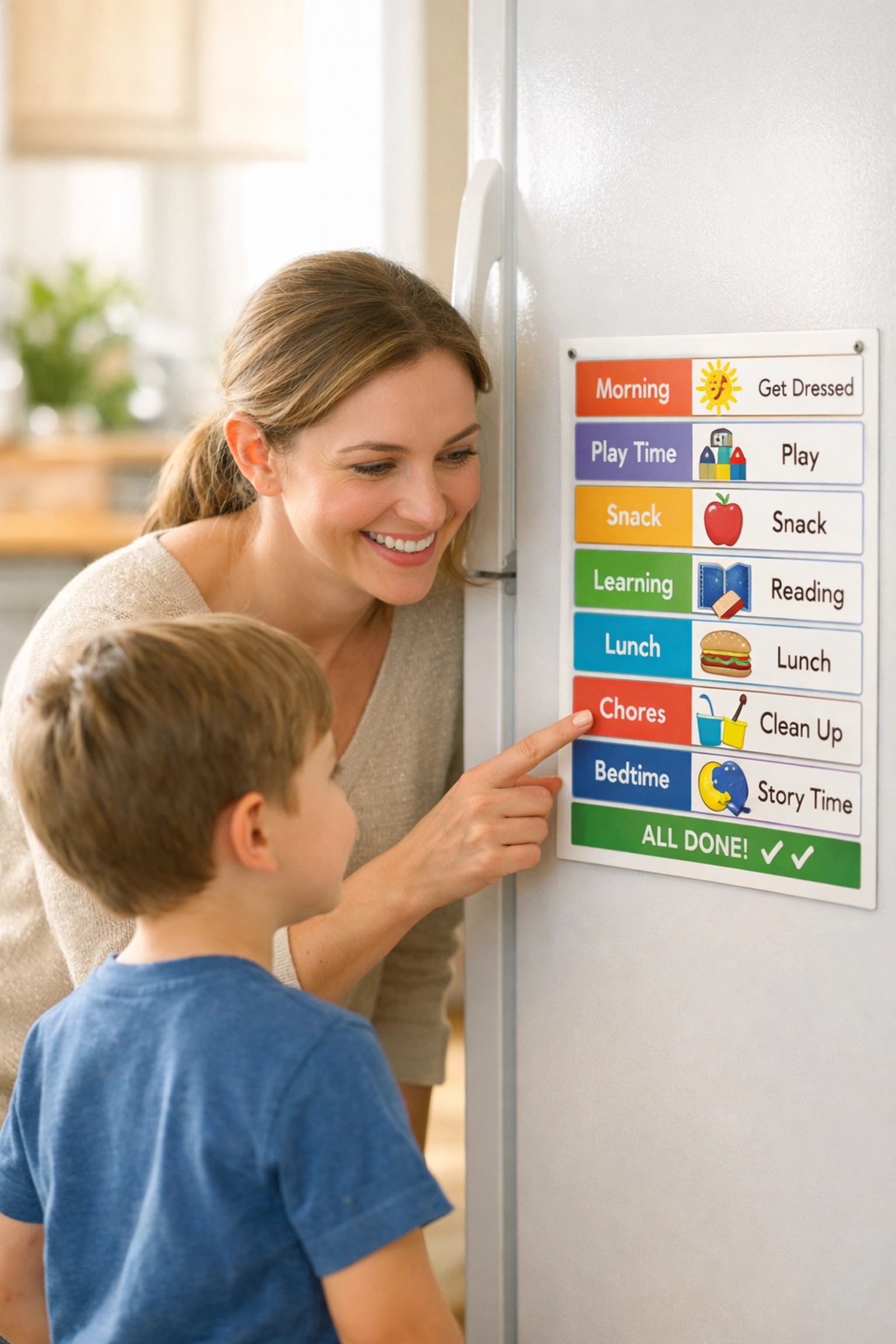
To mitigate this, Georgia parents should focus on structured routines. Visual Schedules are a clinical gold standard for a reason. By using pictures or written lists to outline the day, you provide a roadmap that reduces the "fear of the unknown."
Practical Application:
- Morning and Evening Transitions: Use a "First/Then" board. For example, "First: Put on shoes. Then: Go to the park in Peachtree City."
- Timer Usage: Provide auditory warnings. "In two minutes, the iPad goes away." This allows the child to mentally prepare for the transition, reducing the likelihood of an escalatory response.
2. Identify the Function of the Behavior (The ABCs)
Effective behavior management is impossible without understanding the why. In a clinical setting, a Board Certified Behavior Analyst (BCBA) performs a Functional Behavior Assessment (FBA) to determine the purpose of a behavior. At home, you can use a simplified version of this called ABC Data collection:
- A (Antecedent): What happened right before the behavior? (e.g., You asked them to turn off the TV).
- B (Behavior): What did the child do? (e.g., They threw a remote).
- C (Consequence): What happened immediately after? (e.g., You gave them 5 more minutes of TV to calm them down).
By tracking these instances, you will likely find that the behavior falls into one of the four clinical functions:
- Escape/Avoidance: Trying to get out of a task or demand.
- Attention: Seeking interaction, even if that interaction is a reprimand.
- Tangible: Wanting a specific item or activity.
- Sensory/Automatic: The behavior feels good or relieves internal discomfort.
Understanding the function allows you to stop reinforcing the behavior. If the child throws the remote to get more TV time (Tangible) and you give them more time, you have inadvertently taught them that throwing remotes works.
3. Prioritize Safety and Environmental Modification
When behaviors become severe: such as aggression or property destruction: the clinical priority shifts from "teaching" to "de-escalation and safety." You cannot teach a child a new skill while they are in a state of high physiological arousal.
For families seeking ABA therapy Fayette County GA, creating a "Safety First" environment is a critical component of our parent training.
Steps for Home Safety:
- Clear the Area: If a meltdown begins, remove dangerous objects (glass, heavy items) from the child’s reach.
- The "Safe Space": Designate a specific area of the home: perhaps a corner with floor mats and soft pillows: where the child can go to "regulate." This is not a "timeout" (which is often punitive) but a "time-in" for sensory regulation.
- Neutral Masking: Maintain a calm, neutral tone of voice. High-energy reactions from parents can often "fuel" the child’s behavior, especially if the function is attention-seeking.

4. Implement Differential Reinforcement (Catching the "Good")
One of the most powerful tools in the ABA toolkit is Positive Reinforcement. However, it must be applied strategically. We use a method called Differential Reinforcement of Alternative Behavior (DRA). This involves ignoring the challenging behavior (if safe to do so) while providing heavy, enthusiastic reinforcement for the "positive opposite."
If your child typically screams when they want a snack, the moment they use a single word or a gesture (like pointing) to ask, you should provide the snack immediately along with high praise.
Clinical Tip for Georgia Parents:
Keep a "Reinforcer Menu" of things your child loves: specific toys, a walk around the neighborhood, or a favorite YouTube clip. Use these rewards exclusively for when the child demonstrates the behaviors you want to see. By making the "good" behavior more valuable than the "bad" behavior, the child will naturally begin to choose the more effective communication method.

5. Focus on Skill Acquisition and Professional Support
Behavior management at home is a stop-gap; the long-term solution is teaching the child Functional Communication Training (FCT). If a child can say "I'm frustrated" or "I need a break," they no longer need to hit or scream to get that point across.
However, teaching these replacement behaviors is a complex process that requires consistency and data-driven adjustments. This is where professional autism services Georgia become indispensable.
If you find that:
- The behaviors are causing physical injury to the child or family members.
- You are unable to leave the house due to the unpredictability of the behavior.
- The strategies you’ve tried are no longer working.
It is time to seek a formal behavior intervention plan. At Myers Assessment & Therapeutic Service (MATS), we specialize in helping Georgia families transition from crisis mode to a state of growth and independence.

Navigating the Georgia Landscape
We understand that for parents in Peachtree City and the broader Fayette County area, the healthcare landscape can be daunting. Between navigating Georgia Medicaid and understanding the different tiers of waiver waitlists, the administrative burden is high.
While you work through those processes, remember that consistency at home is your strongest ally. Challenging behavior does not define your child; it defines their current level of communication skill. With the right clinical framework and a commitment to data-based parenting, your home can transform from a place of stress to a sanctuary of learning.
If you are looking for local expertise, ABA therapy Fayette County GA offers a pathway toward long-term stability. You don't have to manage these behaviors in isolation.
For more resources on how we support families through assessment and therapeutic services, visit our About Us page or explore our Services to see how we can help your family thrive.

Summary Checklist for Georgia Parents:
- Visuals: Are the daily expectations clear and visible?
- Data: Do I know the "Function" (the why) of this behavior?
- Safety: Is the environment modified to prevent injury during an escalation?
- Reinforcement: Am I rewarding the "Positive Opposite" more than I am reacting to the challenge?
- Support: Have I reached out to a professional for an FBA or BIP?
By following these steps, you are not just managing a crisis; you are building the foundation for your child's future independence. Stay consistent, stay calm, and remember that progress is a marathon, not a sprint.