
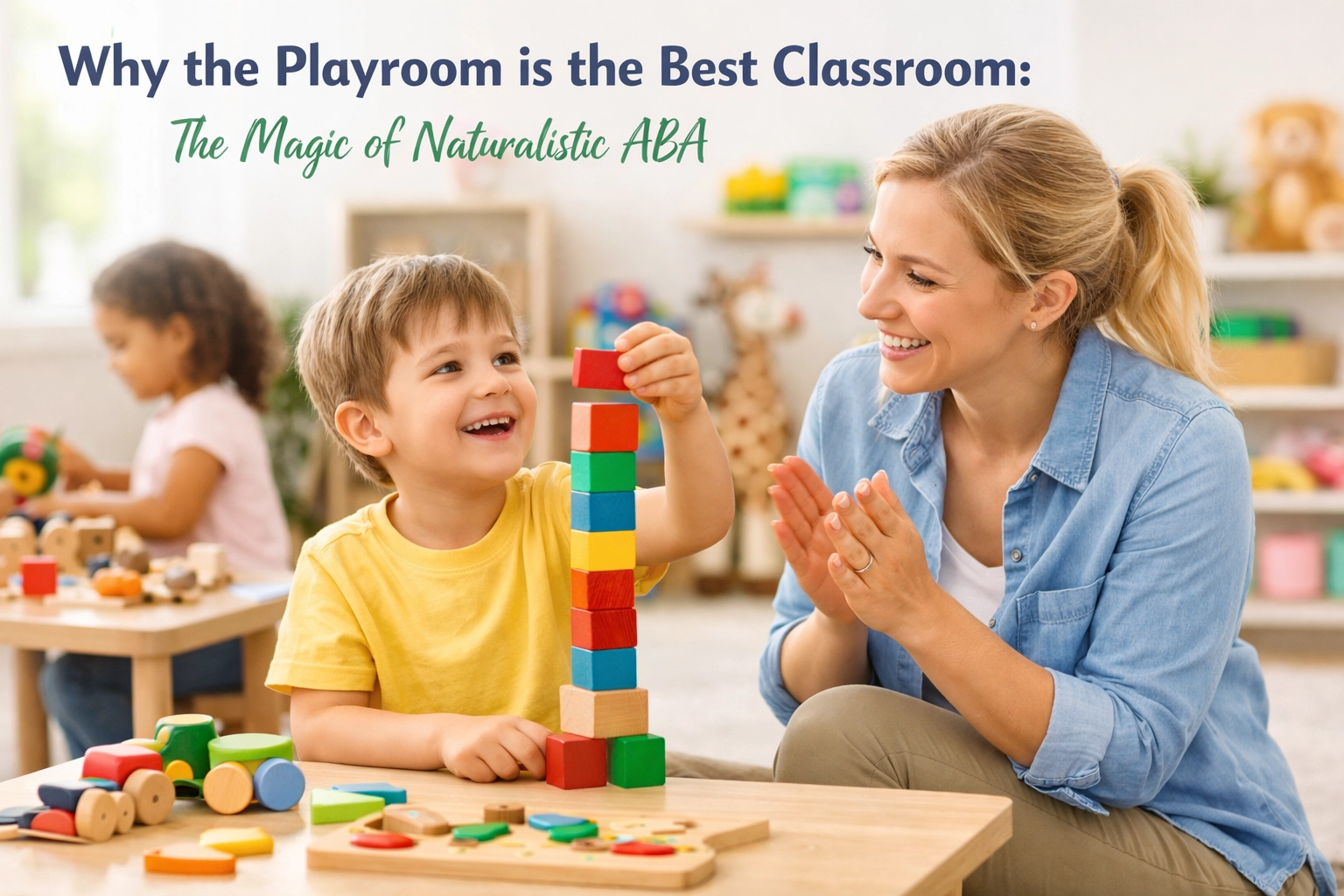
Why the Playroom is the Best Classroom: The Magic of Naturalistic ABA
For many parents in Georgia, the term Applied Behavior Analysis (ABA) conjures up images of a child sitting at a small desk, repeating tasks for hours. This traditional setup, often called Discrete Trial Training (DTT), has its merits, but it is far from the only way to teach.
At Myers Assessment & Therapeutic Service (MATS), we believe the most profound learning doesn't happen at a desk. It happens on the floor, in the dirt, and in the middle of a high-stakes game of pretend.
This is the core of Naturalistic Environment Teaching (NET). By transforming the playroom into a classroom, we unlock a child’s natural desire to learn.
What is Naturalistic Environment Teaching (NET)?
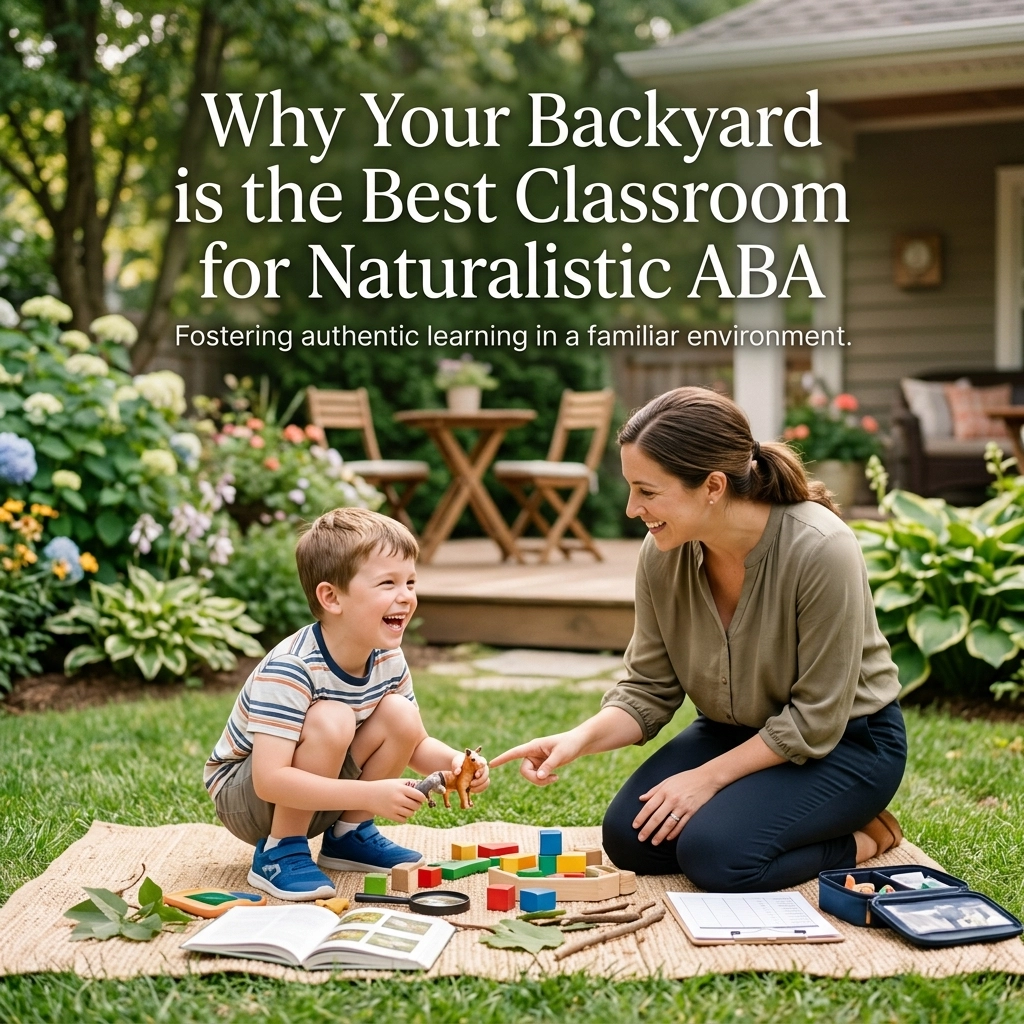
Naturalistic Environment Teaching (NET) is an evidence-based ABA strategy that focuses on teaching skills within the environments where those skills will naturally occur. Instead of a sterile office, the "classroom" becomes the child's natural world: their playroom, the backyard, or even a local park in Newnan or Peachtree City.
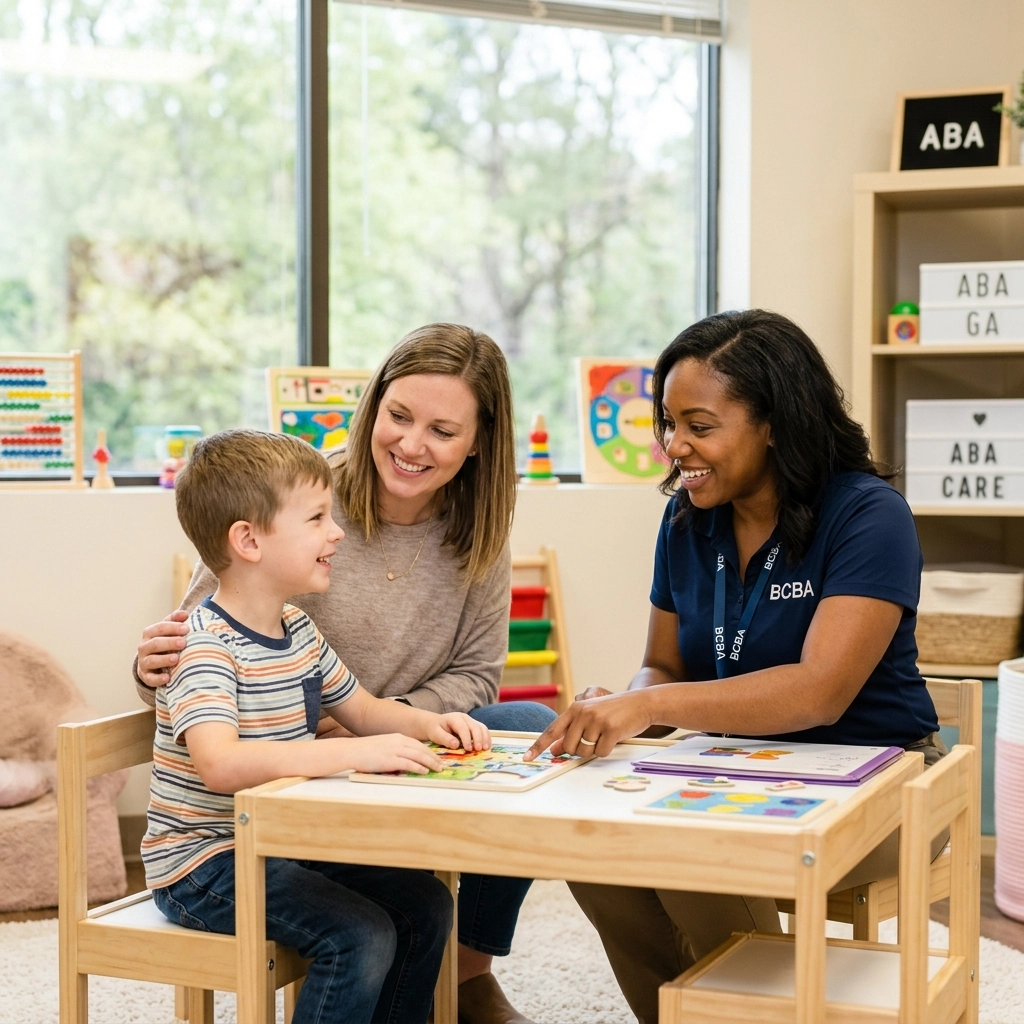
In NET, the Board Certified Behavior Analyst (BCBA) and Registered Behavior Technician (RBT) follow the child's lead. We don't force a specific lesson; we wait for the child to show interest in an object or activity and then turn that interest into a "teachable moment."
The Key Differences: DTT vs. NET
- Discrete Trial Training (DTT): Highly structured, teacher-led, and usually occurs in a controlled setting. It is excellent for introducing brand-new skills that require many repetitions.
- Naturalistic Environment Teaching (NET): Loosely structured, child-led, and occurs in natural settings. It is superior for ensuring a child can actually use their skills in the real world.

Why the Playroom Wins Every Time
Children are biologically wired to learn through play. When a child is engaged with a favorite toy, their brain is primed for acquisition. They aren't "working"; they are exploring.
1. Motivation is Built-In
In traditional teaching, we often have to provide external rewards (like a sticker or a specific treat) to keep a child engaged. In the playroom, the reward is the play itself. If a child wants the blue car to go down the slide, the "work" might be practicing the word "blue" or "slide." The reward is seeing the car zoom down. This intrinsic motivation leads to faster learning and less frustration.
2. Generalization: The Ultimate Goal
The biggest challenge in autism therapy is generalization. This is the ability to take a skill learned in one place and use it in another.
If a child learns to say "help" only when sitting at a specific desk with a specific therapist, they haven't truly mastered the skill. If they learn to say "help" because they can't open a toy chest in their own playroom, they are much more likely to use that word at a friend's house or at school.
3. Reducing "Table Fatigue"
Many children in the Georgia school system spend the majority of their day trying to conform to a seated, structured environment. When they come to Clinic-Based Therapy, the last thing they need is more time confined to a chair. NET allows for physical activities and movement, which are essential for sensory regulation and overall well-being.

Using Familiar Surroundings as Teaching Tools
At MATS, our naturalistic approach leverages the things your child already loves. We don't need fancy, expensive clinical tools to see results. We use the "magic" already present in your child’s environment.
The Kitchen Set: Social and Language Skills
A toy kitchen is a goldmine for therapy. We can work on:
- Prepositions: "Put the apple in the fridge."
- Turn-taking: "My turn to cook, your turn to eat."
- Functional Communication: Asking for "more" juice or "all gone."
Blocks and Legos: Fine Motor and Problem Solving
Building a tower isn't just play; it’s an engineering lesson and a patience exercise.
- Requesting: The child must ask for specific colors or shapes.
- Motor Planning: Balancing blocks requires precision and focus.
- Resilience: Learning how to react when the tower inevitably falls over.
Sensory Bins: Regulation and Vocabulary
Whether it’s rice, beans, or water, sensory play helps children regulate their nervous systems. It also provides a rich environment for descriptive language: words like "cold," "hidden," "crunchy," or "smooth."

The MATS Advantage: Clinic-Based Naturalism
While NET can happen at home, our clinic-based services provide a unique hybrid. We have designed our clinical spaces to feel like high-end playrooms rather than medical offices.
This environment allows us to control the variables just enough to ensure safety and progress while maintaining the "magic" of a natural play space. Our Georgia families benefit from a dedicated space where the sole focus is the child's developmental growth through engagement.
Expert Supervision and Data
Even though it looks like "just play," there is a deep level of clinical oversight happening behind the scenes.
- Data Collection: RBTs are constantly tracking progress on specific goals.
- BCBA Oversight: Our analysts regularly review data to adjust the "play" to meet the child's evolving needs.
- Safety: A controlled clinic environment ensures that even high-energy play remains safe and productive.
Is Naturalistic ABA Right for Your Family?
If you are a parent in the Newnan or Peachtree City area looking for autism services, you might be wondering if your child needs more structure or more play. The answer is often "both," but the weight should always lean toward what keeps the child engaged and happy.
Naturalistic ABA is particularly effective for:
- Early learners who are just beginning to develop communication skills.
- Children who struggle with "sitting still" or have high sensory needs.
- Families who want to see their child use skills independently at home and in the community.
- Children who have experienced "burnout" from more rigid, traditional therapy models.

How Georgia Parents Can Get Started
Navigating the world of ABA in Georgia can be overwhelming. From understanding insurance coverage to finding the right fit, it’s a journey that requires support. At MATS, we are committed to being a partner for Georgia families.
We specialize in allied healthcare and therapeutic interventions that prioritize the child’s dignity and joy. Whether you are looking for an initial assessment or a new approach to ongoing therapy, our team is here to help.
The "Magic" of Naturalistic ABA isn't actually magic: it’s science. It is the science of meeting a child where they are, using what they love, and building a bridge to independence.
Take the Next Step
Your child's playroom is full of potential. Let’s work together to turn those toys into tools for a brighter, more independent future.
For more information on our specific programs and how we integrate naturalistic teaching into our daily sessions, explore our services page or contact us directly to discuss your child's unique needs.

Myers Assessment & Therapeutic Service (MATS) provides comprehensive support for families across Georgia. We believe that every child deserves a learning environment that celebrates who they are while helping them become who they want to be.
Stop looking for the "perfect" classroom and start looking at the playroom. The magic is already there; we just help you find it.