
How to Integrate ABA Therapy into Your Family’s Daily Routine (Without It Feeling Like ‘Work’)
For many families in Georgia navigating an autism diagnosis, the initial introduction to Applied Behavior Analysis (ABA) often involves images of a child sitting at a small table, repeating tasks for rewards. While Discrete Trial Training (DTT) remains a highly effective, evidence-based tool, it is only one piece of the puzzle. At Myers Assessment & Therapeutic Service (MATS), we prioritize a more holistic, integrated approach known as Naturalistic Environment Training (NET).
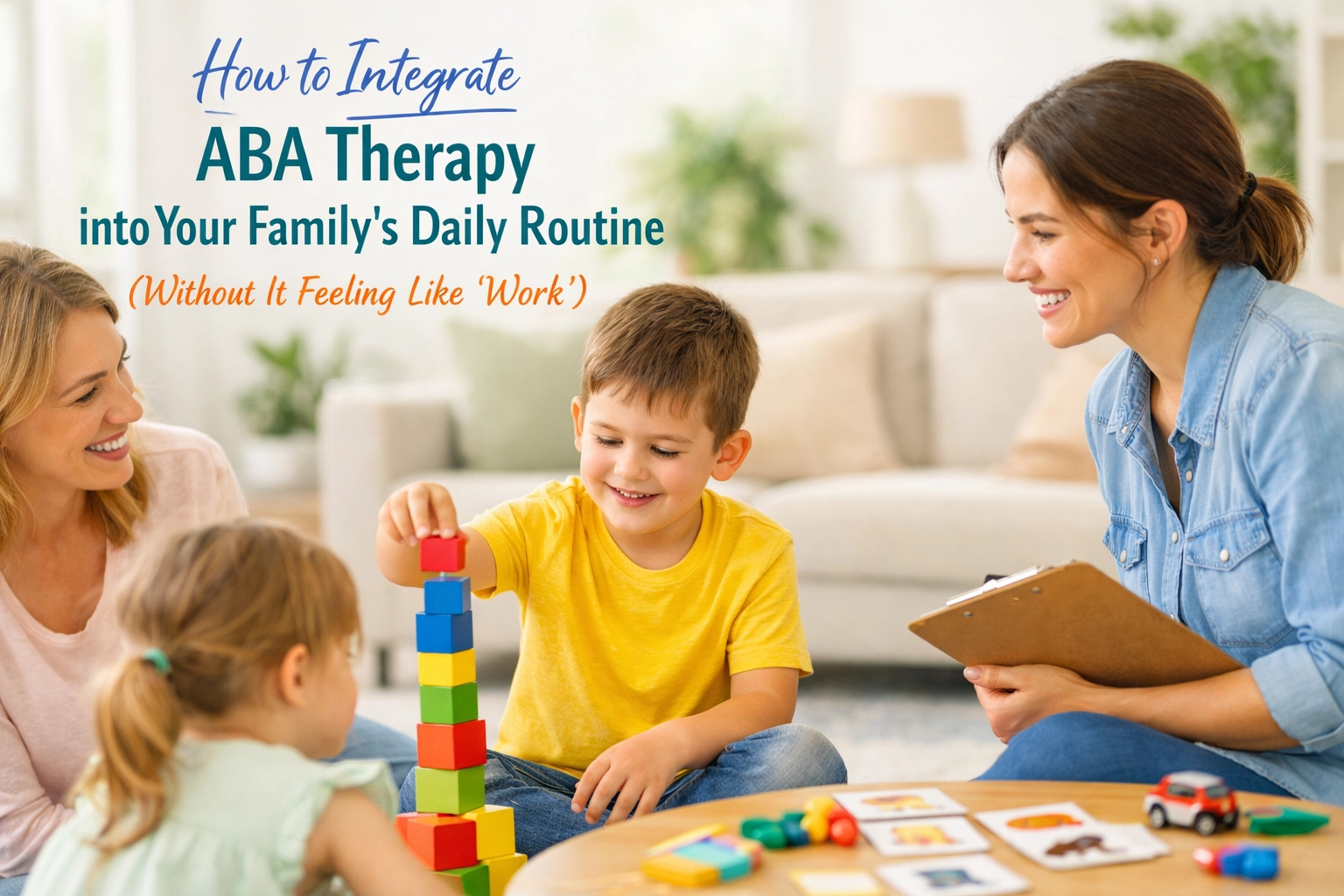
Integrating therapy into the home environment is a primary goal for modern ABA. The objective is to move away from "therapy time" being a separate, stressful block of the day. Instead, the focus shifts to embedding learning opportunities into the activities your family is already doing.
By utilizing naturalistic ABA therapy Georgia families can find a balance that promotes progress without sacrificing the quality of family life.
What is Naturalistic Environment Training (NET)?
Naturalistic Environment Training (NET) is an ABA methodology that focuses on teaching skills within the natural contexts where those skills would typically occur. Unlike structured table work, NET follows the child’s lead and uses their natural interests as the motivation for learning.
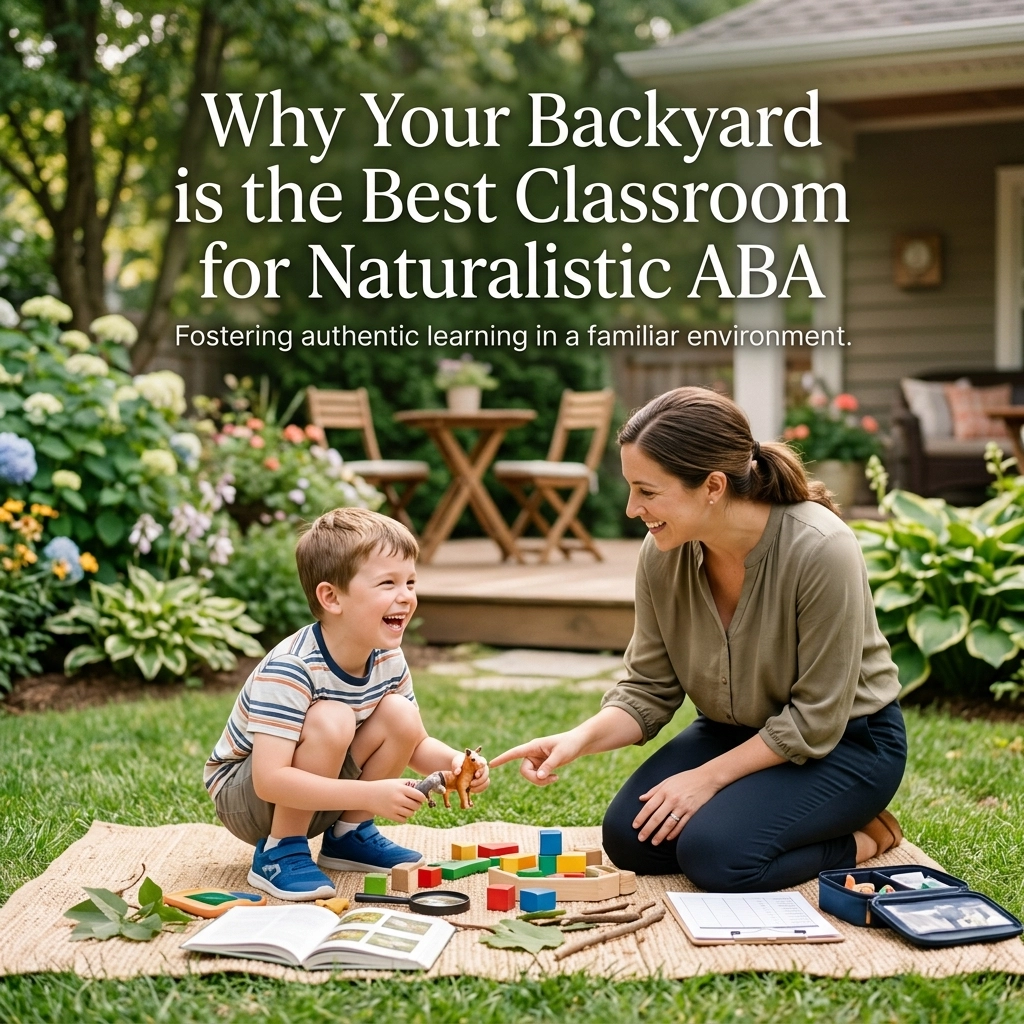
In a NET session, a Board Certified Behavior Analyst (BCBA) or Registered Behavior Technician (RBT) might work with a child in the living room, the backyard, or even at a local Georgia park. The "work" looks like play, but every interaction is a deliberate opportunity to reinforce communication, social skills, and functional independence.
Key Benefits of the NET Approach:
- Reduced Resistance: Children are often more engaged when therapy involves their favorite toys and familiar surroundings.
- Immediate Functional Application: Skills are learned in the exact place they will be used.
- Better Generalization: When a child learns to ask for a snack in their own kitchen, they are more likely to use that skill consistently across different environments.
- Family Inclusion: Parents and siblings can naturally participate in the process, making the therapy feel like a part of the household culture.

The Morning Routine: Turning Chaos into Communication
The morning rush is a universal challenge for Georgia parents. However, these high-activity windows are prime opportunities for parent training ABA Georgia techniques to shine. Instead of rushing through the routine to "get it over with," families can view these moments as built-in therapy sessions.
Communication Temptations
One effective strategy is creating "communication temptations." For example, place a favorite cereal on a high shelf where the child can see it but cannot reach it. This naturally encourages the child to use their preferred communication method: whether it is vocalizing, signing, or using a PECS (Picture Exchange Communication System) icon: to request the item.
Step-by-Step Independence
Morning self-care tasks like tooth brushing and dressing are perfect for task analysis. This involves breaking a complex skill down into smaller, manageable steps. By consistently reinforcing each small success, the child builds the confidence needed for long-term independence.
Mealtime: Social Skills and Sensory Integration
Mealtimes are often the cornerstone of family life, yet they can be a source of significant stress for families with children on the spectrum. Integrating ABA into mealtime is not about forcing compliance; it is about expanding horizons and fostering social connection.
Expanding Food Repertoires
For children with sensory sensitivities or restrictive eating habits, mealtime can be a focus of the MATS process. Using a "first/then" contingency: such as "First touch the new food, then have a bite of your favorite": can slowly decrease food aversions in a low-pressure environment.
Social Reciprocity
The dinner table is the ideal setting to practice social skills. This might include:
- Waiting for others to finish speaking.
- Passing items upon request (e.g., "Can you give me the napkins?").
- Answering simple questions about their day.
By focusing on these skills during a real meal, the child learns that communication has a direct, positive impact on their social environment.

Community Outings: Georgia as a Learning Lab
The goal of ABA is to prepare children for the world around them. This means therapy shouldn't stop at the front door. Georgia offers a wealth of opportunities for community-based learning, from local grocery stores like Publix or Kroger to the various inclusive parks in the metro Atlanta area.
Navigating the Grocery Store
A trip to the store is a masterclass in functional skills. A child can practice:
- Following a visual shopping list.
- Matching items to pictures.
- Waiting in a checkout line (tolerating delays).
- Functional math (counting items or identifying prices).
Public Social Interactions
Visits to the park allow for the practice of "approaching peers" and "taking turns" on playground equipment. These are essential components of early intense behavior intervention (EIBI) that ensure the child can navigate the social nuances of Georgia’s school systems and community spaces.
The Essential Role of Parent Training in Georgia
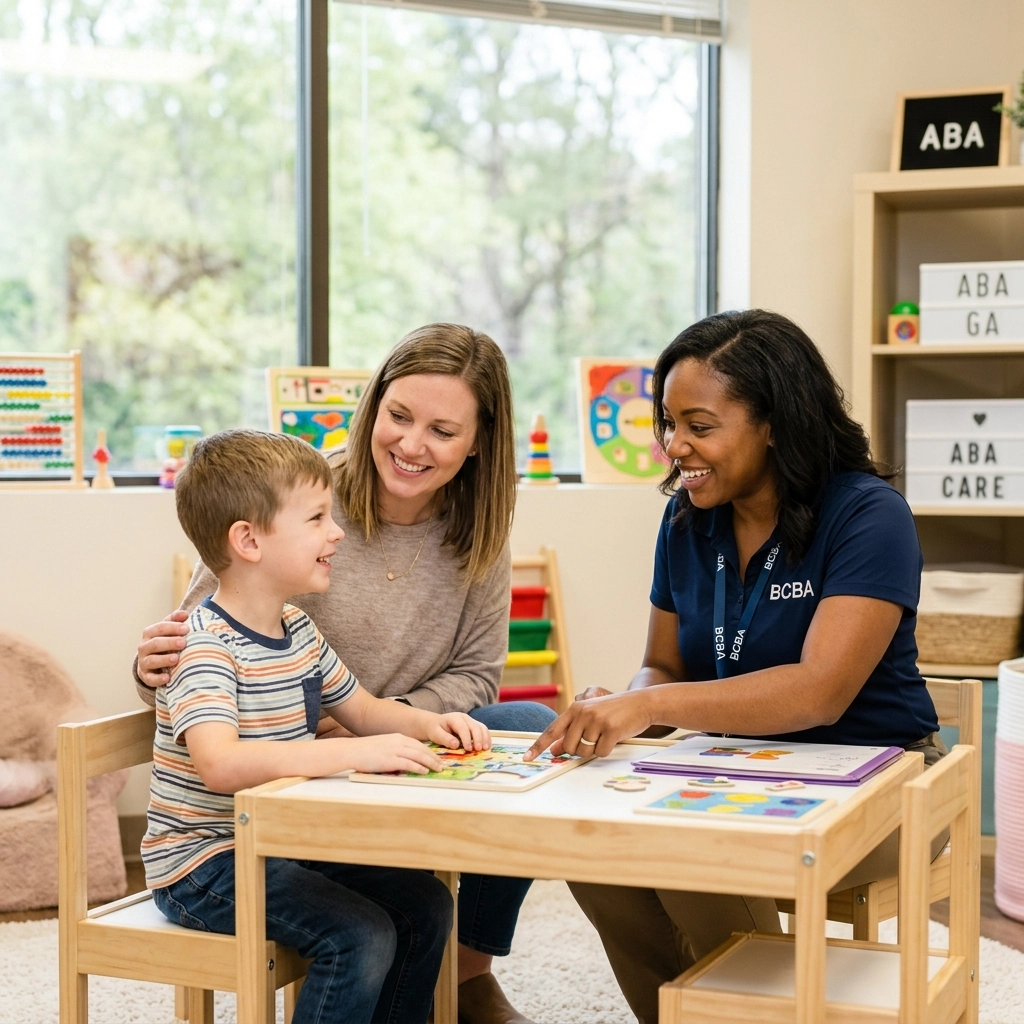
At Myers Assessment & Therapeutic Service (MATS), we believe that the most influential "therapists" in a child's life are their parents. Formal therapy sessions are only a few hours a week; the rest of the time belongs to the family. This is why parent training ABA Georgia is a non-negotiable part of our service model.
Collaborative Goal Setting
Parent training isn't just about learning how to "manage behavior." It is a collaborative process where the BCBA teaches the family how to identify functions of behavior and implement replacement strategies.
Empowerment Through Data
When parents understand the "why" behind a behavior, the stress of the situation often decreases. We provide families with the tools to collect simple data and track progress at home, ensuring that everyone is on the same page and moving toward the same goals.

Utilizing Visual Supports and Structure
Integrating ABA doesn't mean your home has to look like a clinic. However, adding some "invisible framework" through visual supports can drastically reduce anxiety and increase success for the child.
Visual Schedules
A simple visual schedule: using photos or icons: clearly outlines the expectations for the day. This reduces the cognitive load on the child, as they no longer have to wonder what is coming next. This is particularly helpful during transitions, which are often a trigger for challenging behaviors.
Visual Timers
Time is an abstract concept. For a child who struggles with transitions, a visual timer (like a sand timer or a digital countdown app) provides a concrete representation of how much time is left for a preferred activity.
Generalization: The Ultimate Goal of Home-Based ABA
The true test of any therapy is generalization. If a child can only perform a skill in a clinic room with a specific therapist, that skill is not truly mastered. By integrating therapy into daily life, we ensure that the child can perform the skill:
- With different people (Mom, Dad, Grandma, Teacher).
- In different places (Home, School, Target, Park).
- Under different conditions (Even when it's noisy or they are tired).
This "real-world" mastery is what leads to true independence and a higher quality of life for the entire family unit.
Working with MATS in Georgia
If the idea of turning your home into a learning environment feels overwhelming, remember that you don’t have to do it alone. The team at Myers Assessment & Therapeutic Service (MATS) specializes in meeting families where they are.
We offer comprehensive services designed to fit the unique needs of Georgia families. Whether you are dealing with a recent diagnosis or looking to refine your current home-based strategies, our focus is always on creating a supportive, friendly, and effective therapeutic environment.
Our clinicians work alongside you to ensure that every "therapy" moment feels like a natural part of being a family. We focus on the big picture: helping your child thrive in the world, one daily routine at a time.
Take the Next Step
Integrating ABA into your life doesn't mean adding more work to your plate; it means working smarter with the time you already have. If you are ready to explore how naturalistic ABA therapy Georgia can transform your family's daily routine, reach out to us at Myers Assessment & Therapeutic Service (MATS).
Together, we can build a future where your child’s potential is unlocked in the most natural way possible.