
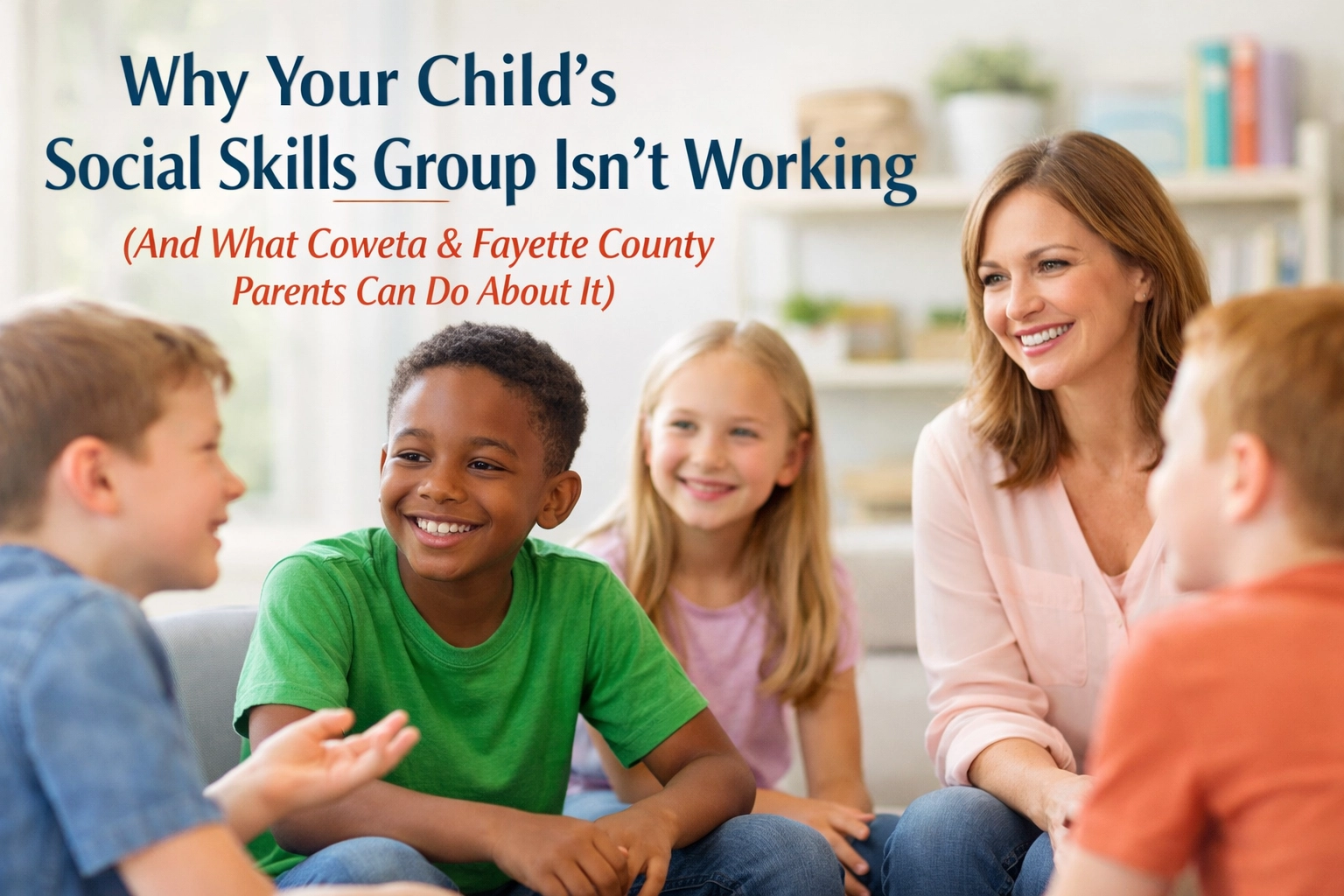
Why Your Child’s Social Skills Group Isn’t Working (And What Coweta & Fayette County Parents Can Do About It)
You've invested time, energy, and money into a social skills group for your child.
Week after week, you drive to sessions. Your child participates. The facilitator sends positive reports.
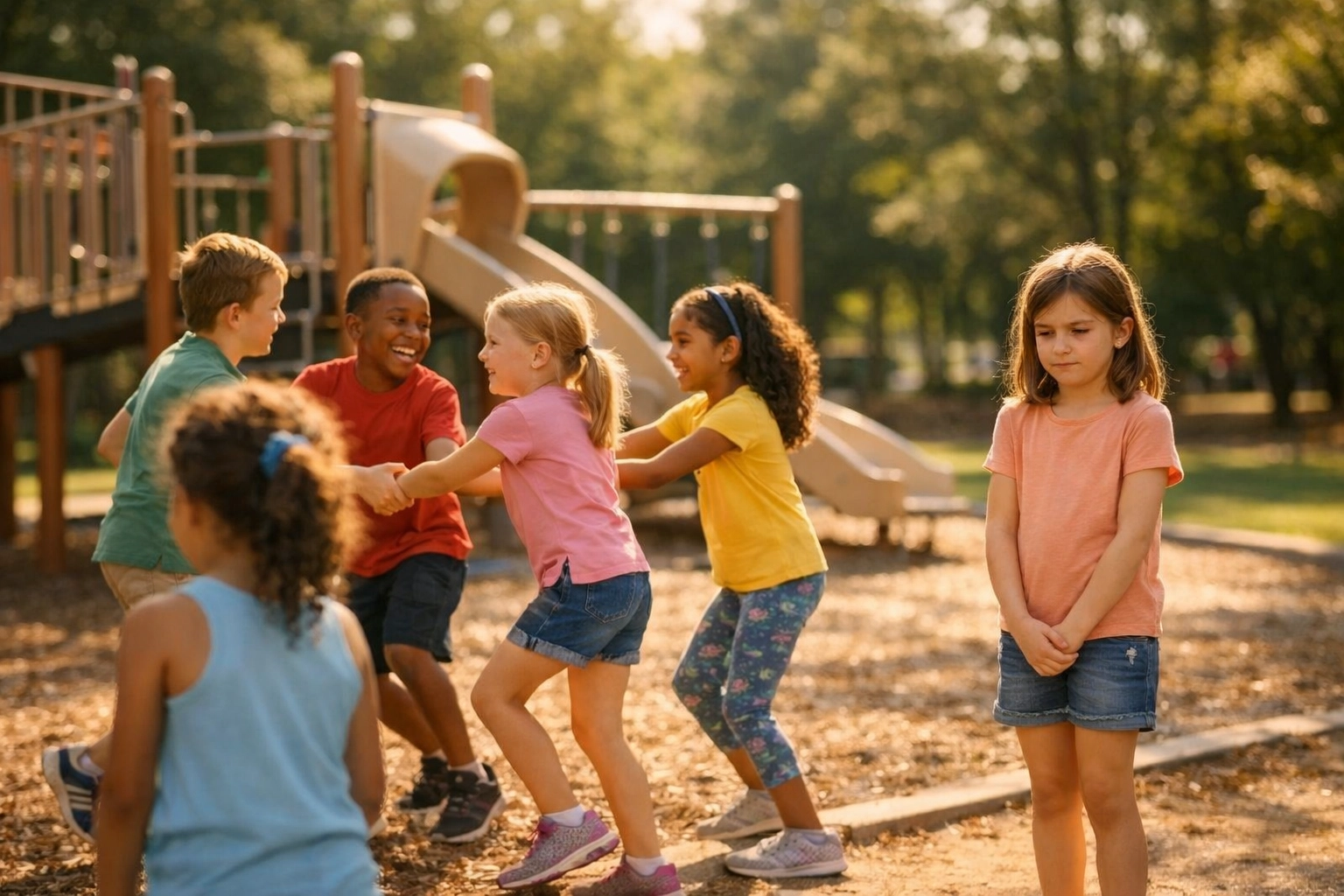
But at the playground in Peachtree City? At birthday parties in Newnan? During playdates in Tyrone? The skills disappear.
You're not imagining it. And you're not alone.
Many social skills groups in Georgia fail to produce lasting change: not because the concept is flawed, but because the implementation misses what actually creates meaningful progress.
The Three Reasons Most Social Skills Groups Don't Work
1. Skills Don't Generalize Beyond the Group Setting
Your child learns to take turns during a structured board game at the clinic.
But that skill doesn't transfer to the soccer field, the school cafeteria, or the neighborhood pool.
Generalization failure is the most common reason families see limited results from social skills interventions. Skills practiced in artificial settings: under specific conditions with the same peers every week: rarely translate to real-world situations.
The brain doesn't automatically apply learned behaviors to new contexts. That transfer requires intentional programming.
2. Interactions Feel Forced or Scripted
Many traditional social skills groups rely on scripted social scenarios and role-playing exercises.
Children practice conversation starters. They rehearse compliments. They learn step-by-step protocols for joining play.
The problem? Real social interaction is dynamic, unpredictable, and context-dependent.
When children memorize scripts rather than develop authentic social flexibility, they struggle in natural peer interactions. Their responses feel robotic. Other children notice.
3. The Curriculum Isn't Tailored to Your Child's Real World
A generic social skills curriculum designed for all children with autism or developmental differences won't address your specific child's needs.
Does your child need help with emotional regulation during competitive activities? Managing sensory overwhelm in group settings? Understanding unspoken social hierarchies at their Fayetteville elementary school?
Without individualization tied to functional real-world goals, social skills training becomes academic exercise rather than practical skill-building.
What Actually Makes Social Skills Stick
Effective social skills intervention requires three critical components:
Naturalistic learning environments. Skills must be taught in contexts that closely mirror real-life situations: not just therapy rooms with standardized materials.
Peer-mediated practice. Children learn social behavior most effectively from interactions with typically developing peers, not just adults or other children receiving services.
Systematic generalization programming. Therapists must intentionally plan for skill transfer across settings, people, and situations.
Research in Applied Behavior Analysis (ABA) demonstrates that naturalistic teaching approaches produce superior generalization outcomes compared to traditional discrete trial methods for social skills.
The difference lies in how the learning happens.
The MATS Approach: Naturalistic ABA for Social Connection
At Myers Assessment & Therapeutic Service, our Saturday Social Skills Groups use Natural Environment Teaching (NET): a naturalistic ABA methodology that embeds skill-building into authentic play and peer interaction.
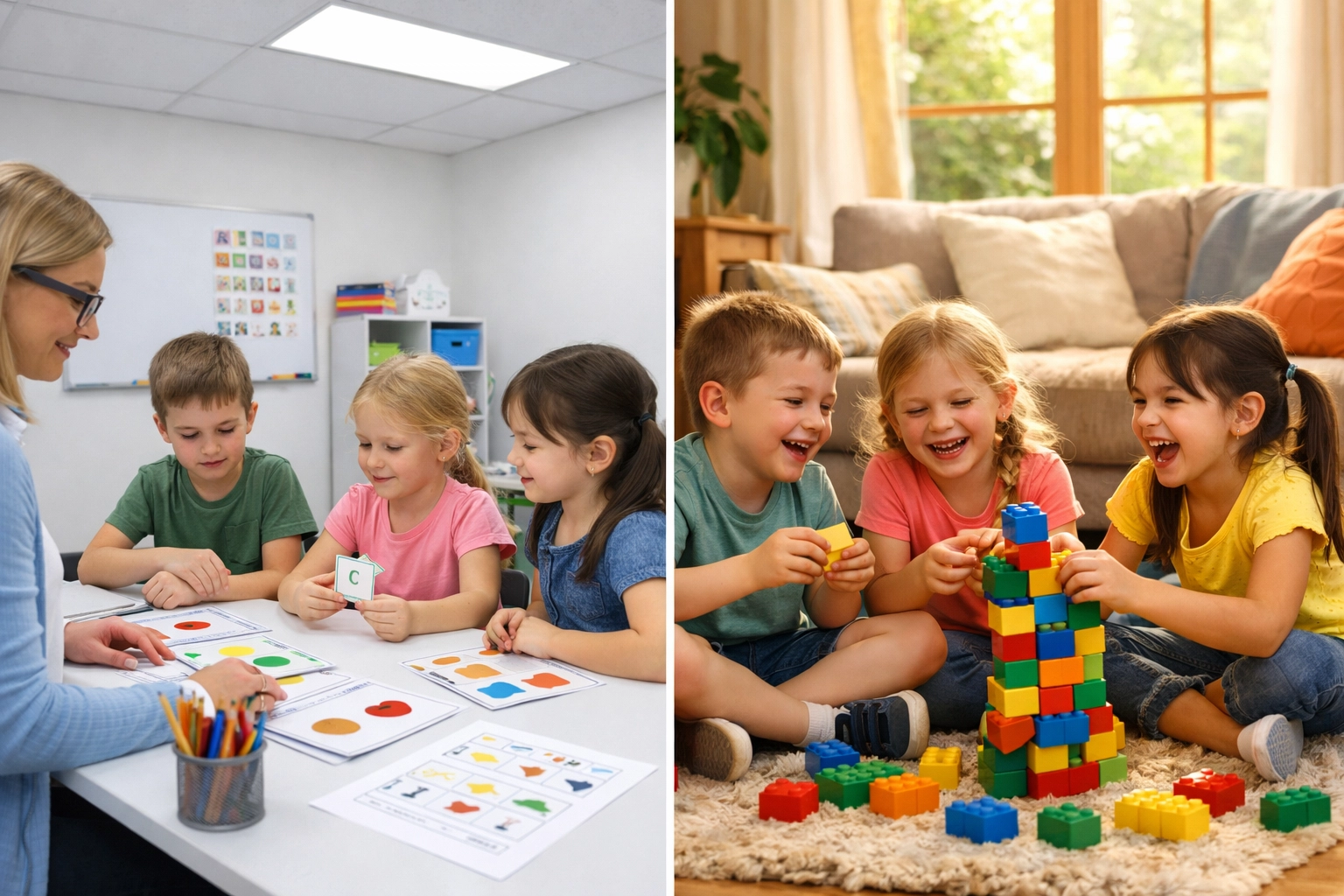
Rather than practicing conversation in a therapy room, children engage in age-appropriate activities that create natural opportunities for social learning.
Building with LEGOs. Playing basketball. Creating art projects. Baking together. Playing video games.
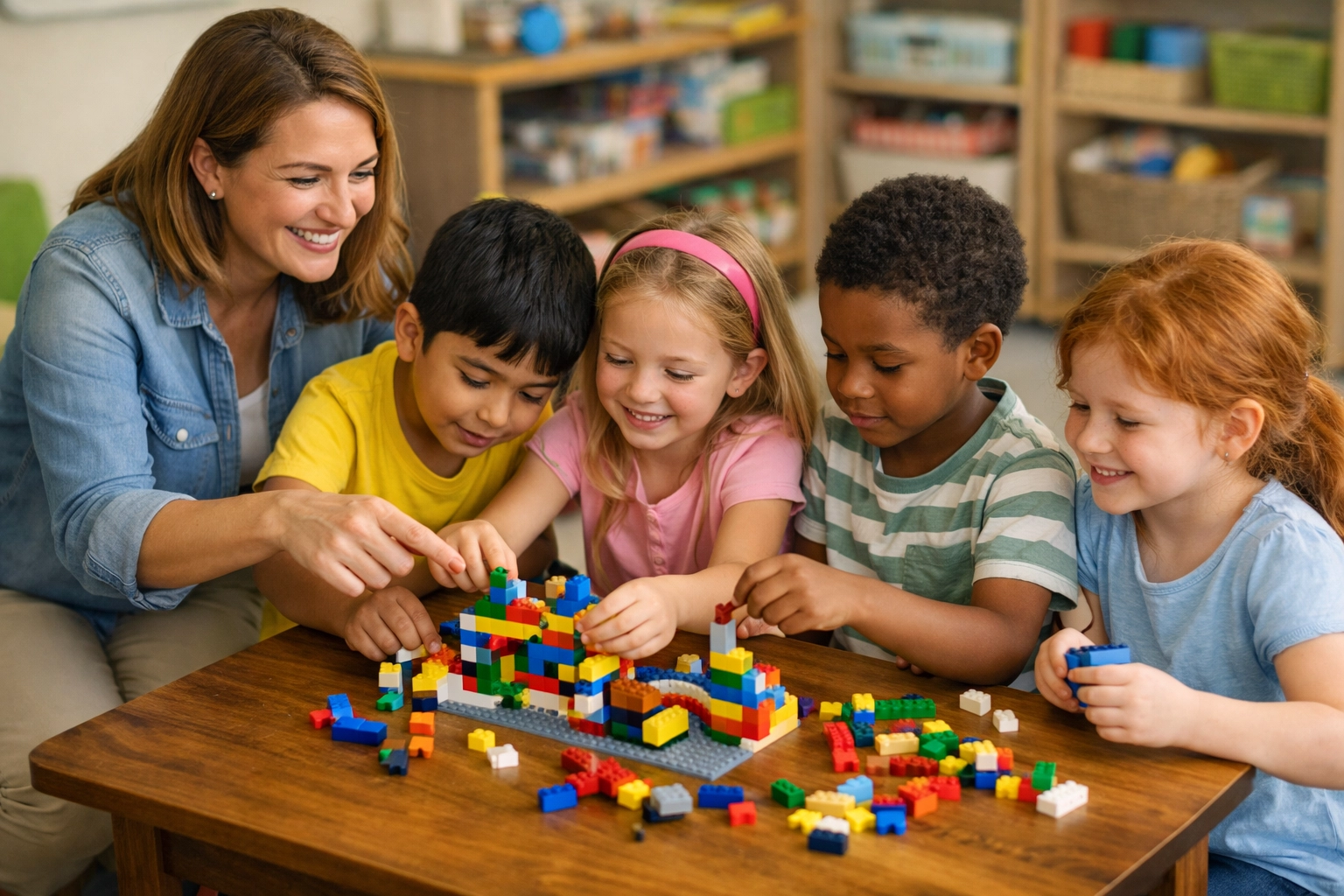
Board Certified Behavior Analysts (BCBAs) and Registered Behavior Technicians (RBTs) facilitate these activities, providing real-time coaching, reinforcement, and support as children navigate actual social situations.
How NET Differs from Traditional Social Skills Training
Traditional approach: "Today we're going to practice asking someone to play. First, make eye contact. Second, say their name. Third, ask your question."
NET approach: Children engage in a preferred activity. When a natural opportunity arises to invite a peer to join, the therapist provides in-the-moment support. The child practices the skill in context, with immediate natural reinforcement (the peer joins the game).
The learning is functional, meaningful, and immediately applicable.
Skills Addressed in Our Saturday Groups
-
Joint attention and shared enjoyment. Following peers' leads, sharing interests, coordinating play.
-
Emotional regulation during group activities. Managing frustration, disappointment, and excitement appropriately.
-
Conversational turn-taking. Asking questions, making comments, staying on topic.
-
Perspective-taking and flexibility. Understanding others' viewpoints, compromising, adapting to changing circumstances.
-
Conflict resolution. Negotiating disagreements, problem-solving with peers.
-
Social initiation. Joining ongoing play, inviting others, maintaining interactions.
Each child receives individualized goals based on functional behavioral assessment and parent input.
Progress is measured through direct observation in natural contexts: not just checklist completion.
Why Peer Interaction Matters More Than You Think
Children learn social behavior primarily through modeling and reinforcement from peers: not adults.
A typically developing peer's natural reaction to your child's social bid (positive engagement, confusion, rejection) provides authentic feedback that shapes future behavior.
Adult-directed social skills training can't replicate this dynamic.
Our Saturday groups create structured opportunities for peer interaction in a safe environment where children can practice, make mistakes, and receive immediate support from trained clinicians.
This combination: real peer interaction plus expert facilitation: accelerates social learning in ways that either component alone cannot achieve.
Who Should Join a Saturday Social Skills Group at MATS
Our groups serve children and adolescents ages 5-18 with:
- Autism Spectrum Disorder (ASD)
- Social communication challenges
- Difficulty making or keeping friends
- Limited peer interaction opportunities
- Social anxiety or withdrawal
Groups are organized by age and developmental level to ensure appropriate peer matching.
We serve families throughout the South Metro Atlanta area, including:
- Fayette County (Fayetteville, Peachtree City, Tyrone)
- Coweta County (Newnan, Senoia)
- Spalding County (Griffin)
- Henry County (McDonough, Stockbridge)
What to Expect from MATS Saturday Social Skills Groups
Session structure: 90-minute sessions focused on naturalistic play and peer interaction.
Staff ratios: Low child-to-therapist ratios ensure individualized attention and support.
Programming: Activities rotate weekly based on children's interests and skill development needs. Children have input in activity selection.
Parent involvement: Regular communication regarding progress, strategies for home generalization, and parent training opportunities.
Data collection: Ongoing measurement of targeted social skills with quarterly progress reports.
Collaboration: Coordination with school teams and other providers when beneficial.
Sessions occur at our Georgia locations, designed to provide comfortable, engaging environments that promote natural social interaction.
The Bottom Line for Coweta and Fayette County Families
If your child's current social skills group isn't producing meaningful change in real-world settings, the problem likely isn't your child.
It's the approach.
Generic curricula, artificial practice settings, and lack of peer interaction limit effectiveness.
Naturalistic ABA through authentic peer activities creates the conditions for genuine social learning: skills that transfer to the playground, the classroom, and the community.
Our Saturday Social Skills Groups in the South Metro Atlanta area provide exactly that: evidence-based ABA therapy in Fayette County GA and ABA therapy in Coweta County GA focused on functional outcomes that matter to families.
Ready to See What Actually Works?
Join a Saturday Social Skills Group at Myers Assessment & Therapeutic Service.
We're currently accepting new participants for age-appropriate groups serving children and teens throughout Fayette County, Coweta County, and surrounding areas.
Contact MATS today to schedule an intake assessment and learn more about our naturalistic approach to social skills development.
Your child deserves social skills training that actually works in the real world: at school in Fayetteville, on sports teams in Peachtree City, and in the Newnan community.
Let's make it happen together.