
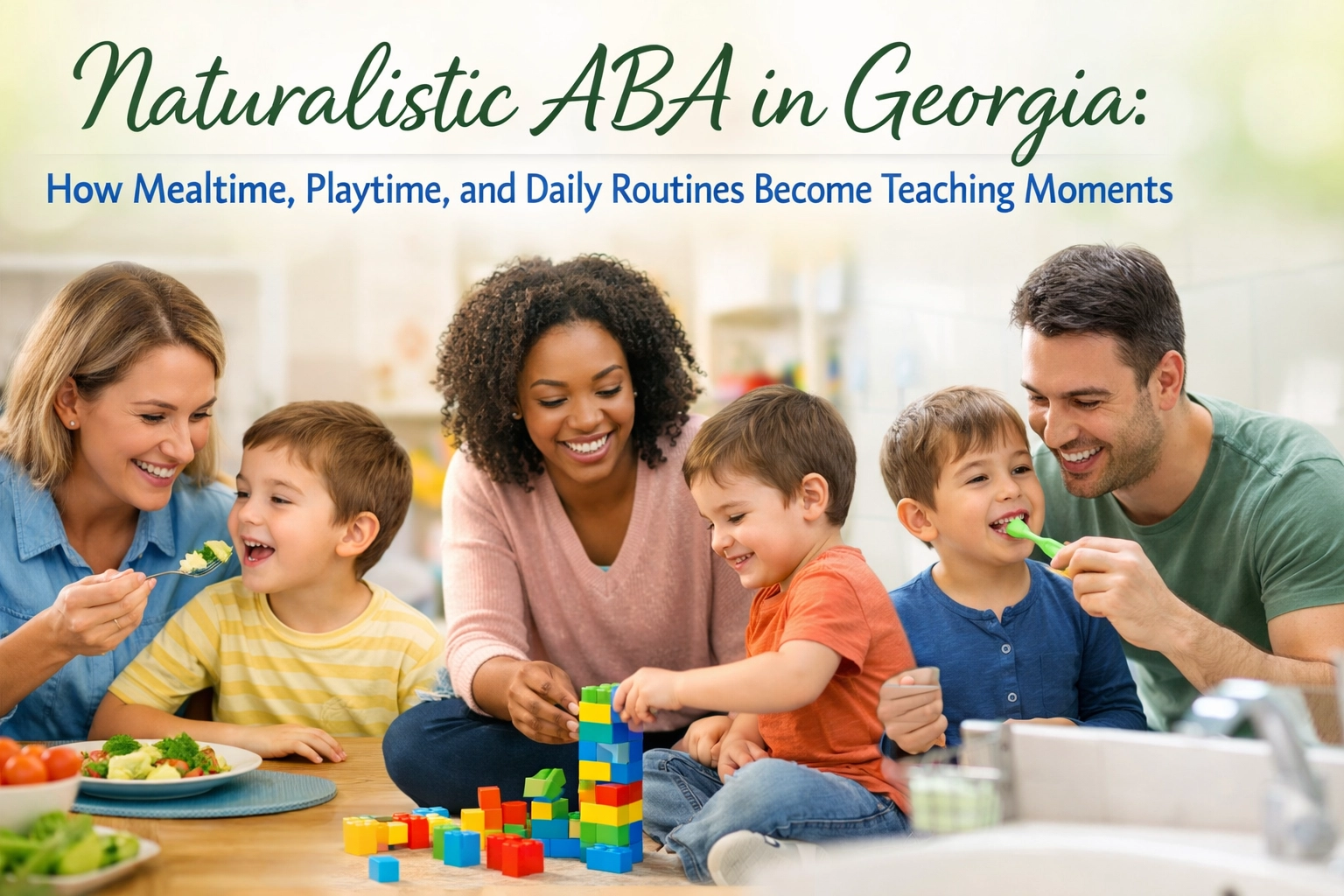
Naturalistic ABA in Georgia: How Mealtime, Playtime, and Daily Routines Become Teaching Moments
Here's something most Georgia families don't realize when they start ABA therapy: some of the most powerful teaching happens when your child doesn't even know they're "in therapy."
That's the beauty of naturalistic ABA therapy: it turns everyday moments into learning opportunities. Instead of sitting at a table doing drills, your child learns communication skills while asking for a snack. Social skills develop during a game of tag in the backyard. Self-regulation practice happens during bedtime routines.
And the best part? Kids actually enjoy it.
What Is Naturalistic ABA (And Why Does It Matter)?
Naturalistic Developmental Behavioral Interventions (NDBIs) combine the evidence-based principles of Applied Behavior Analysis with how children naturally grow, explore, and learn. Rather than relying solely on structured, controlled therapy sessions, naturalistic ABA integrates learning into your child's real-world environment: their home, their playground, their community.
Think of it this way: traditional ABA might teach a child to request "more crackers" at a therapy table using flashcards. Naturalistic ABA teaches that same skill during actual snack time, when your child is genuinely hungry and motivated to communicate.
The difference matters because children learn most effectively in the contexts where they'll actually use those skills.

For Georgia families, this approach is particularly valuable. Whether you live in Tyrone, Fayetteville, or anywhere in South Metro Atlanta, naturalistic ABA means therapy adapts to your family's routines, culture, and daily life: not the other way around.
Why Natural Environments Boost Skill Generalization
One of the biggest challenges in traditional therapy is generalization: helping kids transfer skills learned in one setting to all the other places they need them.
A child might master turn-taking during a structured therapy session but struggle to apply that skill at a playdate. They might learn to follow directions perfectly in the clinic but have meltdowns during transitions at home.
This is where naturalistic ABA therapy in Georgia shines.
When we teach skills in the environment where they'll actually be used, generalization happens naturally. Teaching toilet training in an actual bathroom: not a mock setup in a therapy center: means faster, more meaningful progress. Practicing conversational skills during family dinner means those skills show up at Grandma's house too.
Natural settings also provide authentic motivation. Your child isn't working for a token or a contrived reward: they're learning because they genuinely want to play with that toy, join the game, or get that favorite snack.
What Naturalistic Teaching Actually Looks Like
Let's get specific. Here's how everyday moments become teaching opportunities:
Mealtime Teaching Moments
Snack time and meals are goldmines for naturalistic learning.
Communication skills: Your child reaches for goldfish crackers. Instead of automatically handing them over, we create a brief pause: a natural opportunity for your child to practice requesting. This might be through words ("cracker please"), sign language, or a communication device. The reward? They immediately get what they asked for.
Social skills: Family dinners become practice for turn-taking in conversation, waiting for others to finish eating, and staying seated at the table. These aren't isolated "therapy targets": they're real social norms your child needs in everyday life.
Fine motor and self-help skills: Opening containers, using utensils, pouring drinks. All practiced during actual meals when the motivation is natural and the context is real.

Playtime as Therapy
Play is a child's natural language: and naturalistic ABA therapists are fluent in it.
During outdoor play: A game of tag becomes practice for following rules, waiting for your turn, and managing the frustration of being "it." Your BCBA or RBT might join the game, naturally prompting your child to call a friend's name before tagging them (communication) or to wait at the designated starting line (impulse control).
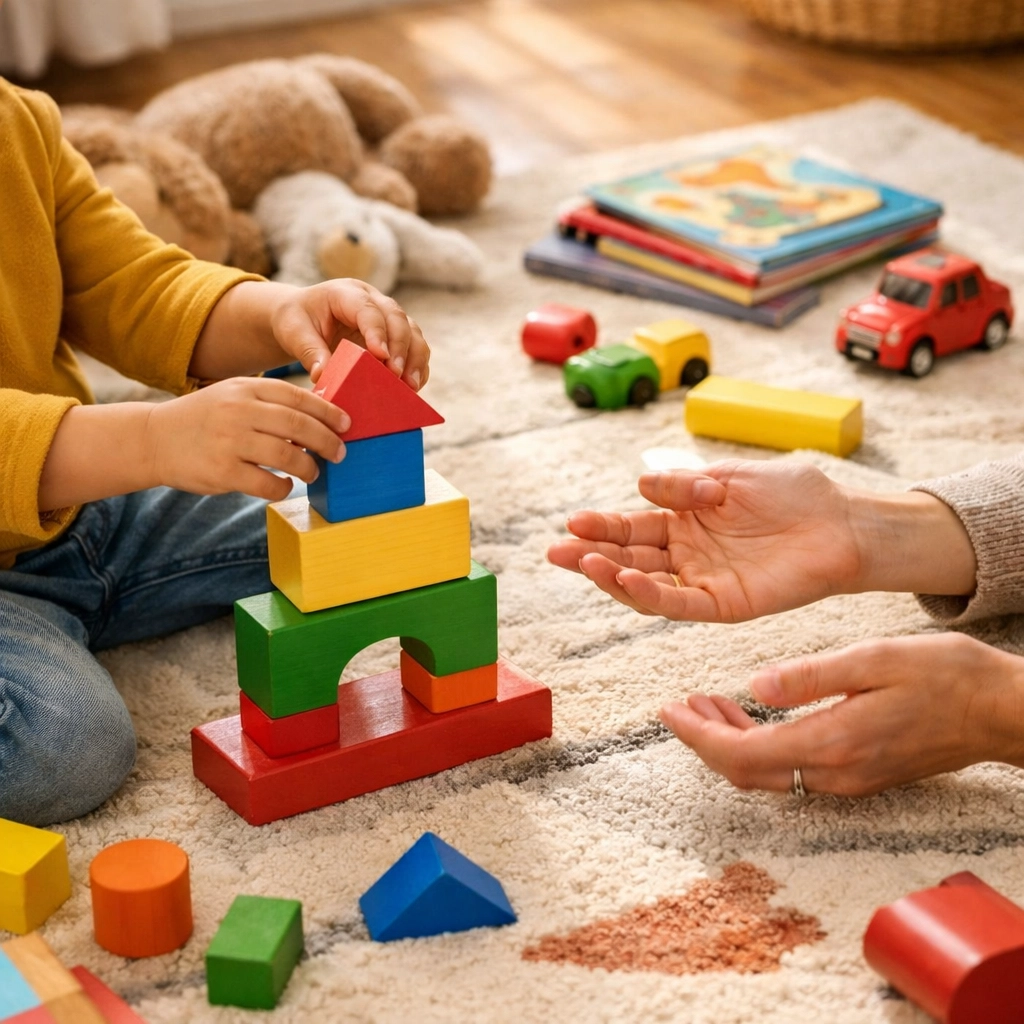
During imaginative play: Building with blocks, playing pretend, or setting up toy cars creates opportunities for language expansion, problem-solving, and joint attention. The therapist follows your child's lead, expanding on their interests rather than imposing arbitrary tasks.
With peers: Naturalistic ABA therapy often includes peer interactions in natural settings: playdates, park trips, or community activities. Social skills develop authentically when practicing with real friends, not just adults.
Daily Routines Become Curriculum
Morning routines. Bedtime. Getting in the car. These transitions that often cause stress can become predictable, teachable moments.
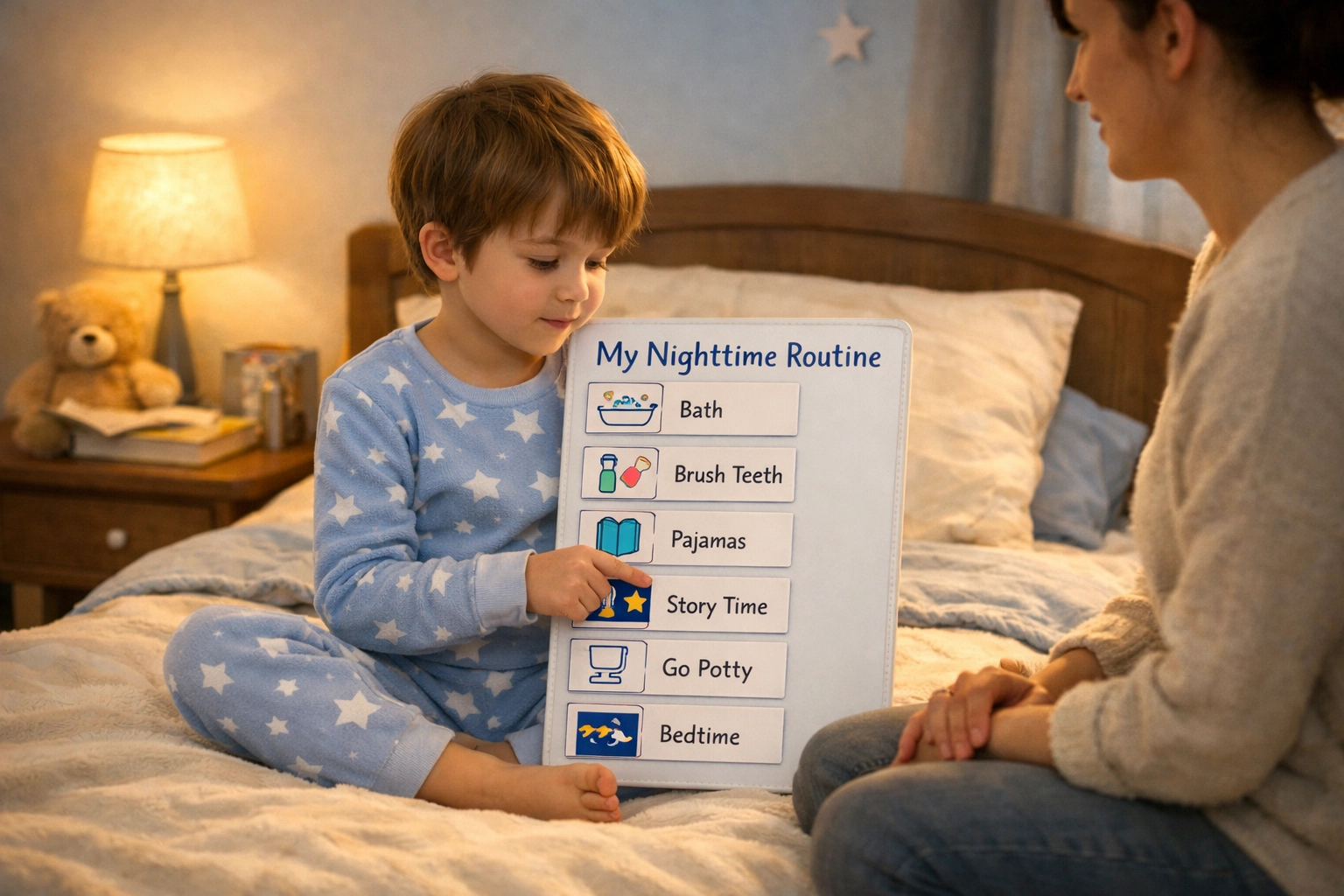
Morning routine example: Instead of a battle, your child learns sequencing (first brush teeth, then get dressed), following visual schedules, and managing transitions. The reward isn't artificial: it's getting to school on time or earning that few extra minutes of playtime before the bus arrives.
Bedtime routine: This becomes practice for self-regulation, following multi-step directions, and accepting transitions from preferred activities (screen time) to non-preferred ones (sleep). The therapist might help your family establish a consistent routine and teach your child the skills to complete it independently.
NET vs. DTT: Understanding the Difference
You might hear your Georgia ABA provider mention Natural Environment Teaching (NET) alongside Discrete Trial Training (DTT).
Both are valuable: but they serve different purposes.
DTT is structured, therapist-led teaching. It's great for introducing new skills, building mastery, and collecting precise data. It typically happens at a table or designated learning area.
NET, on the other hand, is child-led and embedded in natural activities. It's perfect for practicing skills in context, promoting generalization, and keeping learning fun.
Most effective ABA programs in Georgia: including at MATS: use both approaches. We might use DTT to introduce a new communication skill, then immediately practice it through NET during snack time. The combination is powerful.
The key difference? DTT feels like school. NET feels like life.
Making Therapy Feel Less Like Work
Here's what Georgia parents tell us they love about naturalistic ABA:
"I didn't realize therapy was happening. I just thought they were playing."
That's exactly the point.
When therapy is embedded in natural activities, children are more engaged, less resistant, and genuinely motivated to learn. There's no artificial "work time" that they have to endure. Instead, learning becomes seamlessly woven into activities they already enjoy.
This approach also reduces the stigma some older children feel about "having therapy." When your BCBA is helping during a playdate, teaching social skills while you're actually at the park with friends, it doesn't feel clinical: it feels like support.
Family Involvement: You're Part of the Team
One of the most critical components of naturalistic ABA therapy is parent training and coaching.
Because if learning only happens during the few hours a therapist is in your home, progress will be limited. But when you understand ABA principles and can recognize teaching moments throughout your day, learning accelerates exponentially.
Your MATS team will teach you to:
- Recognize natural teaching opportunities during routines you're already doing
- Use effective prompting strategies to help your child succeed without creating dependence
- Reinforce skills naturally using what already motivates your child
- Collect simple data to track progress in real-world settings
- Fade support gradually as your child gains independence
This collaborative approach means you're not just observing therapy: you're implementing it. Your child's progress doesn't pause when the therapist leaves.
What This Looks Like in Georgia
At MATS, naturalistic ABA therapy is central to our approach: especially for young children and those just beginning services.
We provide services primarily in home and community settings throughout South Metro Atlanta, including Tyrone, Fayetteville, Peachtree City, and surrounding areas. This allows us to observe and teach within the exact environments where your child spends their time.
Our approach includes:
- Assessment in natural settings to understand how your child currently functions in daily life
- Individualized treatment plans that target real-world skills your family prioritizes
- Parent training sessions embedded in your actual routines
- Community-based instruction when appropriate (grocery stores, parks, libraries)
- Collaboration with your child's school to ensure consistency across settings
We also recognize that Georgia families have diverse needs, cultural backgrounds, and routines. Naturalistic ABA is inherently flexible: it adapts to your family, not a one-size-fits-all protocol.
Skills That Transfer to Real Life
The ultimate goal of naturalistic ABA therapy isn't to make your child "good at therapy." It's to help them succeed in real life.
That means:
- Communication skills they use at school, with family, and eventually in the community
- Social skills that lead to genuine friendships
- Self-care abilities that promote independence
- Self-regulation strategies they can apply anywhere
- Problem-solving skills that generalize across situations
When we teach these skills in the environments where they matter, your child doesn't have to "translate" what they learned in a clinic to the real world. They're already learning in the real world.
Getting Started with Naturalistic ABA in Georgia
If you're interested in naturalistic ABA therapy for your child, the first step is connecting with a qualified provider who emphasizes this approach.
At MATS, our BCBAs conduct comprehensive assessments that include observation in natural settings: not just formal testing in an office. We want to see how your child functions during actual daily activities, what naturally motivates them, and where the biggest challenges occur.
From there, we develop an individualized treatment plan that prioritizes functional, meaningful goals and uses naturalistic teaching as a primary methodology.
Georgia insurance plans, including Medicaid and most private insurers, cover ABA therapy: including naturalistic approaches implemented in home and community settings. We handle the authorization process and work directly with your insurance to minimize the administrative burden on your family.
Ready to see how everyday moments can become powerful teaching opportunities? Contact MATS today at https://myersassessment.com/contact to learn more about naturalistic ABA therapy in Georgia. Let's turn playtime, mealtime, and daily routines into your child's best learning experiences.